Skip the Referral Queue: What Veterans Need to Know About 'Provider Connect'

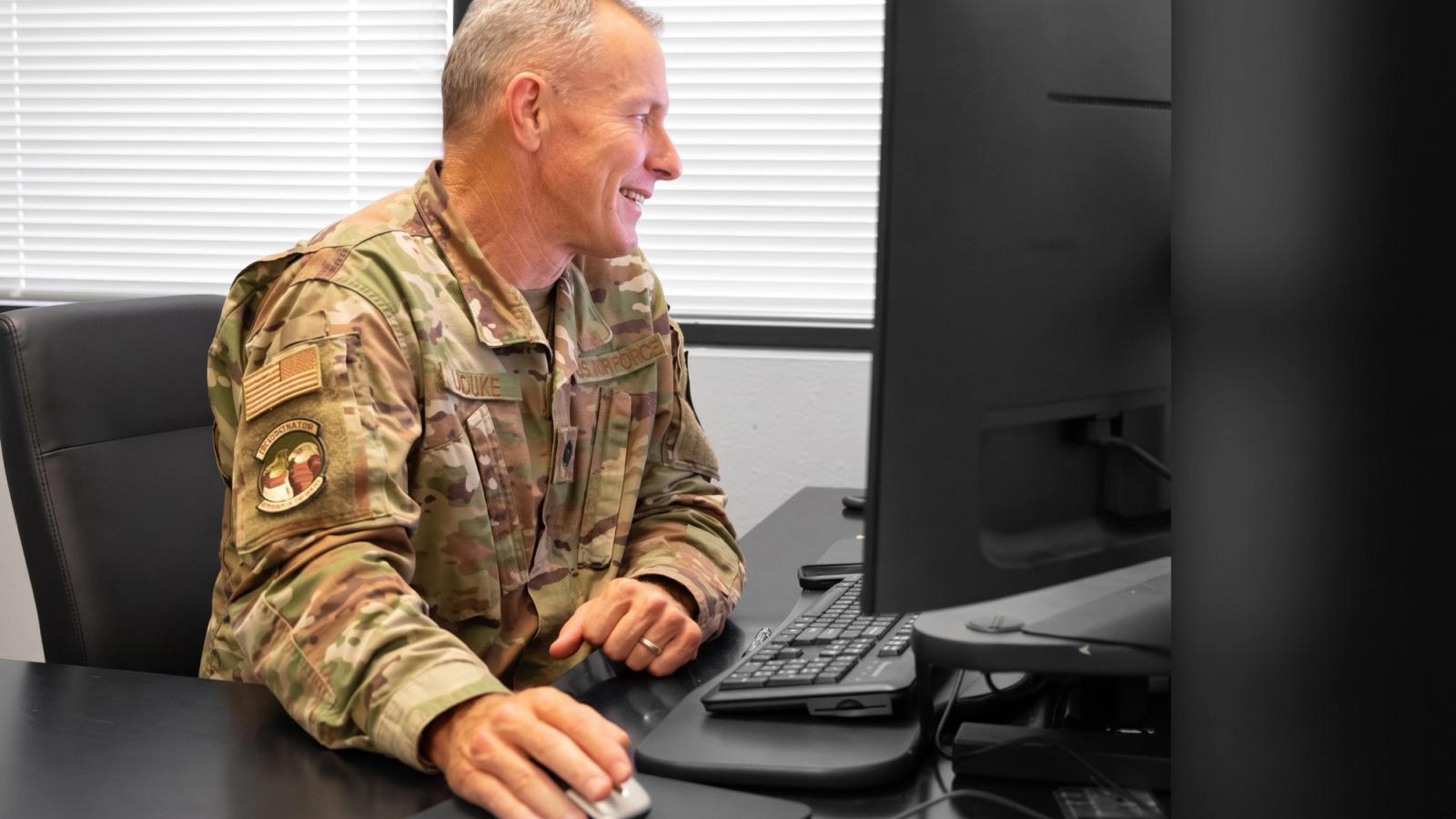
The VA launched a pilot program late last month called Provider Connect that attempts to close that gap with something deceptively simple: real-time video access to specialists during the primary care appointment itself. A provider pulls up an Availability Matrix, sees which specialists are online across the VA network, and connects directly - no referral queue, no separate scheduling cycle, no weeks of waiting. The Veteran leaves with a treatment plan instead of an appointment.
The early case studies are genuinely promising. And the timing could not be more complicated.
What Provider Connect Actually Does
The mechanics are straightforward. When a VA primary care provider needs specialist input, the Availability Matrix shows which specialists across the VA's network are currently online and available for a consultation. The provider connects, the specialist joins the appointment, and together they assess the patient in real time. More than 26 specialties are currently accessible through the system.
The VA's Digital Health Office published two illustrative cases in its June 28 announcement on VA News. In the first, a Veteran with chronic back pain had his primary care provider connect directly with a physical therapist through Provider Connect. Together, they developed a home exercise program the Veteran could start immediately, eliminating a separate physical therapy visit entirely.
In the second, routine blood work raised questions about possible liver concerns. The primary care provider looped in a gastroenterologist on the spot. The specialist reviewed the results, reassured the provider that the findings were likely not urgent, and recommended follow-up tests. The Veteran went home with clarity and a plan, the same day.
"Veterans can save some time, money, and stress without waiting for or traveling to the specialty appointment," said Laurel Ghose, director of Connected Care for the VA Boston Healthcare System.
The VA's own access standard for specialty care is 28 days, meaning a Veteran should wait no longer than four weeks from referral to appointment. In practice, peer-reviewed research published in JAMA Network Open found that VHA specialty appointment wait times averaged 35.4 days, with significant regional variation. Community-based care outside VA ran even longer, averaging 41.9 days. For a Veteran managing pain, a cardiac concern, or an unresolved neurological question, a month-plus wait is not an inconvenience. It is a gap in care that compounds.
Provider Connect addresses that gap not by adding specialists to the referral queue but by sharing the ones already in the system across geographic boundaries. A specialist with availability in Boston can consult on a patient presenting in rural Montana. The platform explicitly targets veterans in rural or medically underserved areas, where the specialist shortage is most acute, and the drive to the nearest VA facility is most punishing.
Greg Reese, a Veteran who lives in the Texas Hill Country more than two hours from the main VA facility in San Antonio, said,
”I’d welcome anything that reduces the number of drives into San Antonio for care, excited to try this out as soon as it's deployed to our area.”

The Access Problem It Is Designed to Solve
The VA's telehealth infrastructure has grown substantially. In fiscal year 2025, more than 2.9 million Veterans participated in over 14.6 million episodes of care through telehealth, a 10 percent increase over the prior year. Satisfaction rates are strong: 92.9 percent of Veterans reported being satisfied with video telehealth visits, and 92.2 percent said they trusted the care they received, according to VA data published in January 2026.
But that growth has largely been about connecting Veterans with their own assigned providers remotely. Provider Connect is a meaningfully different model. It lets a primary care provider, during an appointment already underway, pull in a specialist they may never have worked with before, from anywhere in the VA system, within minutes. That is the difference between telehealth as a scheduling convenience and telehealth as a clinical infrastructure.
Sen. Jerry Moran, R-Kan., chair of the Senate Veterans Affairs Committee, told Government Executive magazine,
“While it is encouraging to see wait times improve in certain specialty areas at the Department of Veterans Affairs, there is still more work to be done. No veteran, especially those facing cancer, addiction or mental health conditions, should have to wait days, weeks or months to receive the care they have earned through their service.”
The platform also takes aim at a well-documented inefficiency in the VA referral system. A January 2025 Government Accountability Office report (GAO-25-106678) found that the VA's Referral Coordination Initiative - the internal program intended to streamline specialty care scheduling - had been implemented inconsistently across facilities, lacked clear performance standards, and did not have adequate program direction documented in national policy. The GAO made five recommendations. The VA concurred and estimated corrective actions would be completed by November 2025, though GAO noted it would evaluate that follow-through independently.
That same report noted that in fiscal year 2023, 2.9 million Veterans received community care, routed outside the VA system because internal capacity could not meet demand. The number using community care has grown from 1.1 million in 2014, a trajectory that reflects both rising enrollment under the PACT Act and a system consistently unable to keep up internally. Community care is not always well-coordinated, is expensive for the system, and still requires scheduling cycles that create delays.
Provider Connect is designed to shorten the time between primary and specialty care. If a primary care provider can obtain specialist guidance during the initial visit, many of those downstream referrals may become unnecessary.
A Remaining Hurdle: Staffing VA Clinics and Support Staffs
Unfortunately, there are some self-inflicted structural issues that make implementation harder than it otherwise would have been a couple of years ago.
Between January and September 2025, the VA shed approximately 30,000 positions. These cuts came largely through attrition, early retirements, and hiring freezes under the Trump administration's workforce reduction directive, although some were direct reductions of civil servants in temporary positions or on probationary status. A Senate Veterans Affairs Committee report found that in fiscal year 2025 alone, the VA lost more than 40,000 employees; 88 percent of those who left the Department were health care staff, including doctors, nurses, mental health clinicians, and other frontline employees.
Fiscal year 2025 also marks the first annual net loss of staff in VA history. More significant than the overall numbers is who left. The cuts translated into a reduction of approximately 1,000 physicians, 3,000 registered nurses, and 1,500 schedulers. The VHA's total workforce declined from a peak of roughly 428,000 to approximately 403,000, a net reduction of about 25,000 (6%) clinical and administrative positions in the Veterans Health Administration specifically.
Those numbers land differently depending on facility size and specialty. Dr. Steven Braverman, who served as VHA chief operating officer from late 2024 through September 2025 and brought nearly 30 years of Army medical experience to that role, said in an April 2026 analysis by Government Executive magazine that the data showed "a mixed picture of improvement and worsening despite VHA's efforts toward improvement across the board." He noted that smaller facilities, in particular, were struggling to maintain specialty wait time standards and were "especially vulnerable to the departure of staff in those fields."
That vulnerability is directly relevant to Provider Connect. The platform's entire value proposition rests on the Availability Matrix, showing specialists who are online and ready to consult. If the specialist workforce has contracted, the matrix becomes sparser. A platform designed to share capacity across geographic boundaries cannot function if there is insufficient capacity to share.
The rural Veterans Provider Connect is most designed to help those who are precisely the ones most exposed to this dynamic. A 2024 GAO report on VA telehealth access found that in fiscal years 2022 and 2023, 14 of 24 VA-designated telehealth access point locations had zero visits - a sign that access infrastructure without staffing to support it produces limited real-world results.
More than 4.4 million Veterans live in rural areas, nearly one quarter of the total Veteran population. Rural VA facilities historically face the worst specialist shortages, and those same facilities are most vulnerable to attrition because clinicians in rural areas have fewer employment alternatives and longer tenure, meaning departures are harder to replace quickly.

A Promising Pilot in a System Under Pressure
All of these statistics are arguments for programs like Provider Connect. The case studies reflect a real benefit, and the problem they address has been documented for years. The ability to use specialist capacity in one region to serve patients in another is a game changer for Veterans who live far away from medical centers where specialists practice.
The VA is expanding telehealth capabilities while simultaneously managing a workforce that multiple independent analyses describe as strained and difficult to rebuild. A February 2025 GAO report found that of 27 recommendations the agency had made to improve the Veterans Community Care Program, the VA had fully implemented only 9, with 18 remaining to be addressed. This will obviously complicate the VA’s ability to scale the program.
Veteran health is one area where there has been bipartisan cooperation and support. The Military Construction and Veterans Affairs, Agriculture, and Legislative Branch Appropriations Act, 2026 (H.R. 3944) directed the VA to submit a staffing model to the appropriations committees within 90 days. That direction was an indication that, from Capitol Hill, no clear consensus exists on what adequate staffing looks like under the current structure. The legislation also set explicit access standards as benchmarks: no more than 20 days for primary and mental health care, no more than 28 days for specialty care. Meeting those standards with a reduced workforce and rising PACT Act enrollment is the operational challenge around which every telehealth innovation, including Provider Connect, will ultimately be judged.
In FY2025, VA said they completed 82,083,918 direct care appointments, up 4.1% from FY2024. But the appointment volume statistic does not capture what happens to veterans who needed a specialist and waited six weeks, or whose provider lacked access to real-time consultation and had to send them home with a referral that took three more weeks to process.
What Veterans Should Do Right Now
Provider Connect is a pilot program. It is not available at every VA facility, and the VA has not published a deployment map. The most practical step for any enrolled veteran is a direct conversation with their primary care team: ask whether Provider Connect is available at your clinic, whether it applies to your specialty care needs, and if not, what telehealth consultation options do exist.
Veterans in rural areas or those who have experienced repeated specialist referral delays have both the most to gain from the program and the clearest standing to request it. The VA Telehealth Services website at telehealth.va.gov is the right starting point, as is the My HealtheVet portal, which allows Veterans to send secure messages to their care teams outside of scheduled appointments.
Veterans experiencing long waits that exceed the VA's own 28-day specialty care standard may also be eligible for community care under the MISSION Act, which allows Veterans to seek outside care when the VA cannot meet access criteria. The 2025 removal of the secondary review step for community care referrals streamlined that process - once a Veteran and their provider agree on a referral, it no longer requires a second VA physician's approval. That is worth knowing.
The broader point is this: the VA has recognized that the traditional referral model is a structural inefficiency that harms Veterans, especially those far from major medical centers. Rather than ask Veterans needing specialty care to complete their primary care visit, wait for referral processing, wait for specialty scheduling, and travel to a separate appointment, this is a burden, especially on those Veterans who live far from their primary care facility. Provider Connect represents a genuine attempt to solve that problem by reengineering the care sequence rather than simply accelerating the existing one.
Whether it can do so at scale, in a system managing workforce contraction and record enrollment simultaneously, is the question that will determine its actual impact. Veterans, their families, and the advocacy organizations that represent them have both a stake in that answer and a responsibility to press for the transparency needed to evaluate it honestly. Asking your care team about Provider Connect is not just good health management. It is also how promising pilots get the utilization data they need to survive and expand.
Continue Reading

VA Health Connect Gives Veterans 24/7 Access to Nurses and Changes How They Get Care
Veteran Benefits

How to Get a VA Appointment Faster: Community Care, Access Standards, and More
Veteran Benefits
VA Launches Nationwide Dental Provider Network to Improve Veteran Access
Veteran Benefits
Join the Conversation

BY MICKEY ADDISON
Military Affairs Analyst at VeteranLife
Air Force Veteran
Mickey Addison is a retired U.S. Air Force colonel and former defense consultant with over 30 years of experience leading operational, engineering, and joint organizations. After military service, he advised senior Department of Defense leaders on strategy, readiness, and infrastructure. In additi...
Credentials
Expertise
Mickey Addison is a retired U.S. Air Force colonel and former defense consultant with over 30 years of experience leading operational, engineering, and joint organizations. After military service, he advised senior Department of Defense leaders on strategy, readiness, and infrastructure. In additi...