New VA Partial Claim Program Aims to Address Rising Veteran Foreclosures

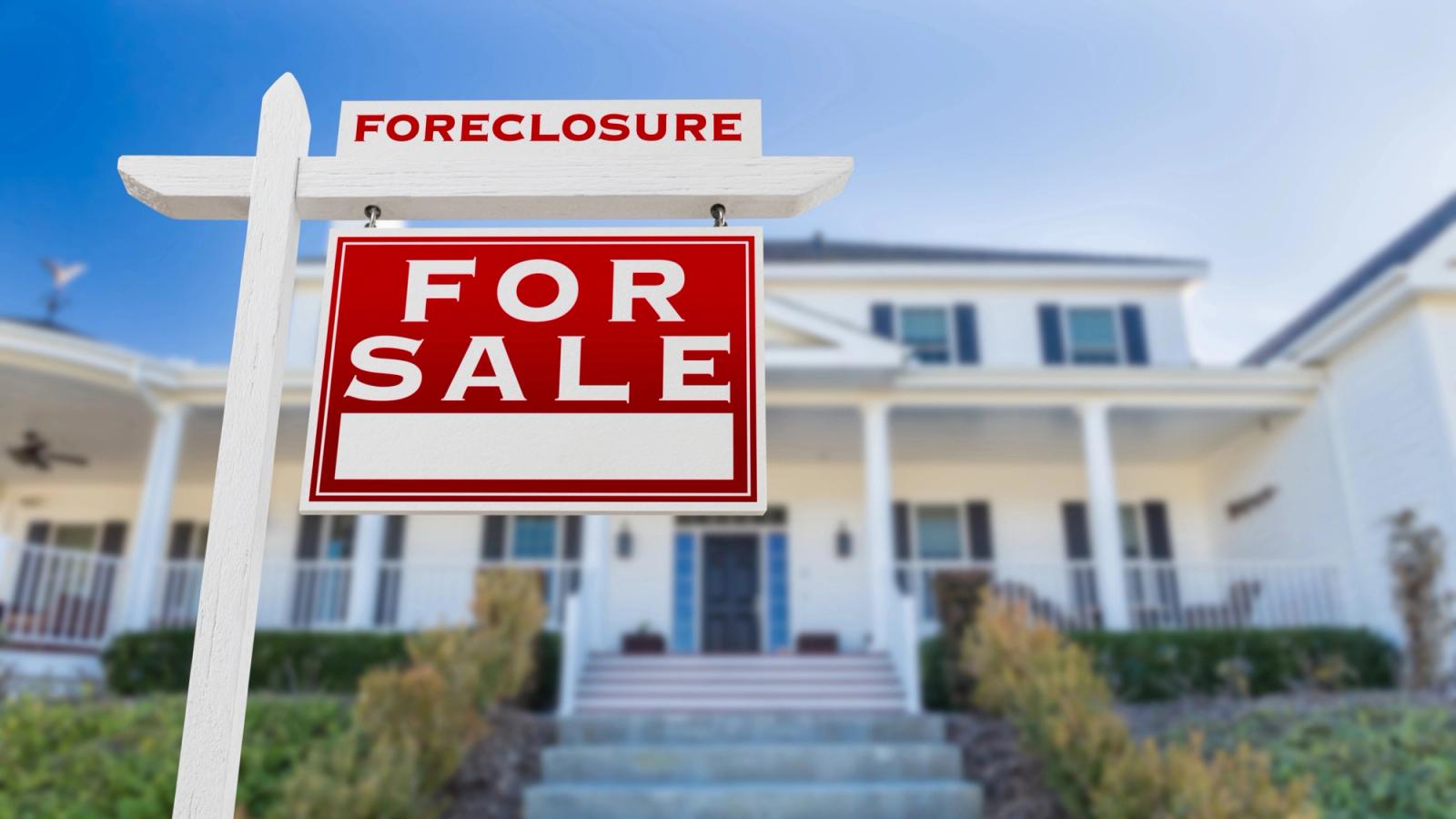
The Department of Veterans Affairs has launched a new foreclosure-prevention program for the tens of thousands of Veterans struggling to keep up with mortgage payments on VA-backed home loans. The VA’s Partial Claim Program opened for submissions on June 15, 2026, offering eligible borrowers a way to defer missed payments as a subordinate lien rather than face foreclosure or absorb higher monthly costs through a loan modification.
The program arrives after more than 10,000 Veterans lost their homes following the May 2025 end of the VA's previous mortgage relief initiative, the Veterans Affairs Servicing Purchase (VASP) program, according to the VA. An estimated 90,000 additional VA loans were either seriously delinquent or already in the foreclosure pipeline at that time, according to an Urban Institute analysis. Housing advocates and members of Congress had urged the VA to act more quickly to fill the gap left when that program ended without a permanent replacement in place.

The Crisis That Made This Necessary
To understand why the VA’s Partial Claim Program matters, you need to understand what happened before it existed.
For years, VA-backed home loans have been one of the most celebrated benefits available to military service members and Veterans. Unlike conventional mortgages, VA loans require no down payment and carry competitively low interest rates. Since the program began after World War II, the VA has helped Veterans, service members, and survivors purchase more than 29 million homes.
But the safety net beneath that system had a hole in it.
During the COVID-19 pandemic, the VA offered a partial claim option from 2021 to 2022, allowing borrowers who had fallen behind to defer missed payments without altering their loan terms. When that pandemic-era program closed, no permanent successor was put in place. The stopgap that followed was the VASP program, which allowed the VA to purchase delinquent loans from servicers and modify them at a fixed 2.5% interest rate.
VASP worked. Then it abruptly ended on May 1, 2025.
With VASP gone and no replacement ready, Veterans who fell behind on payments were left with a deeply unappealing menu of options: miss payments and face foreclosure, or pursue a loan modification that resets their interest rate to current market levels — often leaving them with higher monthly payments than before they sought help.
The numbers that emerged were staggering. More than 10,000 Veterans lost their homes in the months following VASP's termination. According to an analysis by the Urban Institute, nearly 90,000 VA loans were seriously past due, with approximately 33,000 already in the foreclosure pipeline. Lawmakers from both parties, along with housing advocates, sent urgent letters to VA Secretary Doug Collins demanding emergency intervention, including, in one May 2026 letter signed by multiple House members, a targeted foreclosure moratorium until the new program could be fully operational.
The foreclosure crisis prompted a bipartisan legislative response. Congress passed the VA Home Loan Program Reform Act, and President Trump signed it into law on July 30, 2025, creating the statutory authority for the VA's Partial Claim Program now being implemented.
In the official VA press release on the program, Collins said,
“We are grateful to Congress and President Trump for creating VA’s Partial Claim Program, which will help keep thousands of Veterans in their homes.”
That relief was echoed by other Veteran service organizations who had been sounding the alarm during the gap months, such as Disabled American Veterans.
“This law helps ensure Veterans are not left behind when financial hardships strike,” said Joy Ilem, DAV’s national legislative director.
How the VA's Partial Claim Program Works
At its core, the VA's Partial Claim Program is a structured way for Veterans to catch up on missed mortgage payments without blowing up their original loan terms. Here are the step-by-step mechanics:
Step 1 — Trial Payment Period.
When a mortgage servicer identifies a Veteran in default who appears to qualify, they place that borrower on a three-month trial repayment period. The Veteran must make their regular monthly payment on time for three consecutive months.
Step 2 — Servicer Advances the Arrears.
Once the trial period is successfully completed, the mortgage servicer pays the overdue balance, bringing the loan current.
Step 3 — VA Reimburses the Servicer.
The VA then repays that same amount to the servicer, effectively advancing the funds on the Veteran's behalf.
Step 4 — Deferred Subordinate Lien.
The amount the VA advances becomes a subordinate lien on the property, essentially a second loan attached to the home. Critically, it carries no monthly payments and no interest. The Veteran repays it only when the loan is paid off, the home is refinanced, or the property is sold.
The program covers VA-guaranteed loans only and applies exclusively to primary residences. It can be used to cover up to 25% of the original loan balance — or up to 30% for borrowers who previously used the COVID-era partial claim. Retroactive eligibility applies to loans affected during the period beginning March 1, 2022, through May 1, 2025 — the gap years between the end of COVID relief and the closure of VASP.
Servicers have until November 28, 2026, to fully integrate the program into their systems, though submissions were accepted starting June 15, 2026.

Comparing VA Foreclosure Prevention Options
The Partial Claim Program is one of several tools the VA now makes available to borrowers in distress. Understanding the landscape helps reveal where the partial claim fits — and where it doesn't.
The partial claim's defining advantage is the one thing loan modifications cannot offer in a high-rate environment: returning the borrower to their original payment amount.
That distinction matters enormously when a Veteran secured a 3% rate in 2021 and would face a 7% rate on a modified loan today.
The Hidden Caveat: Who It Won't Help
Mortgage industry professionals have been careful to note what the VA's Partial Claim Program is not. Neil Caron, of CMG Mortgage, said that partial claim policies don't usually provide ongoing payment assistance. He explained that,
"[Partial claim programs] help during temporary setbacks, but for homeowners with ongoing hardships, they can quietly drain equity and limit future options."
The mechanism is structurally sound for the right borrower, someone who fell behind due to a temporary disruption (job loss, medical emergency, a death in the family) but has since stabilized their finances and can resume regular monthly payments. For that Veteran, the partial claim is a lifeline that preserves their loan terms without punishing them for a rough patch.
But for a Veteran whose income has permanently declined, resuming the pre-default monthly payment may be just as impossible after the partial claim as before it. The program brings the loan current; it does not make the ongoing payment more affordable.
The Urban Institute flagged this limitation in its analysis of the program's design: as currently structured, the partial claim cannot reduce the principal balance or subsidize payments over time. It is a bridge, not a foundation. For some borrowers, the bridge doesn't reach far enough.
Additionally, the program carries a five-year sunset. The VA Home Loan Program Reform Act authorizes partial claims only through July 30, 2030, unless Congress extends the authority.
Legal analysts and industry observers have noted that some reporting has characterized this as a permanent replacement for VASP — a characterization that is not accurate under the statute. Veterans and servicers should understand that the program's long-term continuity remains subject to legislative action.
The Unique Angle: A Benefit Used as a Sales Tool, Protected as an Afterthought
There is a tension at the heart of this story that rarely surfaces in policy coverage: the VA home loan benefit is among the most aggressively marketed perks of military service, yet the protection infrastructure around it has historically been built reactively, cobbled together after crises rather than proactively designed to endure.
Recruiters, lenders, and Veteran service organizations promote the VA loan guarantee in glowing terms: zero down payment, no private mortgage insurance (PMI), competitive rates, and a path to homeownership that conventional borrowers can only dream of. And those benefits are real.
The VA guaranteed more than 528,000 new home loans in fiscal year 2025 alone, which is a 26.8% jump from the prior year. Since the program's post-World War II founding, it has helped more Americans purchase homes than any other single federal housing initiative.
Yet, the foreclosure backstop protecting those same borrowers has been built in fits and starts: a COVID patch here, a temporary purchase program there, and now, after more than 10,000 Veterans lost their homes in the gap, a five-year partial claim program that may or may not be renewed.
The contrast is stark: the front end of the VA loan benefit (origination, marketing, and closing) is a well-oiled machine. The back end, what happens when a Veteran hits financial hardship, has been improvised.
Advocates view the new law as a way to finally standardize that back-end protection.
“The shift to the partial claims program aims to provide a more consistent and effective solution for Veterans facing financial hardship, aligning VA’s loss mitigation options with those available through other federal housing programs,” said DAV Associate National Legislative Director Joe Lemay.
The VA's Partial Claim Program is a genuine step forward. But it raises a broader question worth examining: should this benefit come with a permanent foreclosure safety net as opposed to one that expires in 2030 and requires Congress to act again to survive?
What Happens Next
The VA's Partial Claim Program is now live, but full implementation is still rolling out. Veterans who are currently behind on their payments should take these steps:
- Contact your loan servicer immediately. Ask specifically whether they are currently processing partial claims and what documentation you will need to provide.
- Call the VA Regional Loan Center at 877-827-3702 (select option 6) if you are having trouble reaching a resolution with your servicer.
- Document your hardship. Be prepared with a written explanation of what caused the delinquency, proof of current income, recent bank statements, and evidence that the hardship has stabilized.
- Watch the servicer's deadline. All servicers must have the partial claim capability implemented by November 28, 2026. If your servicer is not yet processing claims, other VA loss-mitigation tools remain available in the interim.
- Beware of scams. The VA warns that Veterans behind on payments are frequently targeted by third-party companies offering foreclosure relief. Work only with your servicer and the VA directly.
For Veterans who cannot reach a resolution with their servicer, the VA's Loan Guaranty support portal offers an alternative path to assistance.
You May Qualify for a VA Home Loan
VA home loans offer no down payment, no PMI, and competitive rates. See how your service record qualifies you.
Continue Reading
Behind on Your VA Mortgage? A New Foreclosure Prevention Program Launches June 15
Veteran Benefits
VA Foreclosure Prevention Program Eliminated: What Veterans with VA Home Loans Need to Know Right Now
Veteran Benefits

New VA Life Insurance Benefit Coming Soon
Veteran Benefits
Join the Conversation

BY TRACY FUGA
Military Spouse & Military Lifestyle Writer at VeteranLife
Tracy Fuga is a San Diego-based writer, editor, and marketing professional with nearly two decades of experience in content creation and communications. A former editor at MARCOA Media — the original publisher of MyBaseGuide — she has a long-standing connection to the military community as the pro...
Expertise
Tracy Fuga is a San Diego-based writer, editor, and marketing professional with nearly two decades of experience in content creation and communications. A former editor at MARCOA Media — the original publisher of MyBaseGuide — she has a long-standing connection to the military community as the pro...