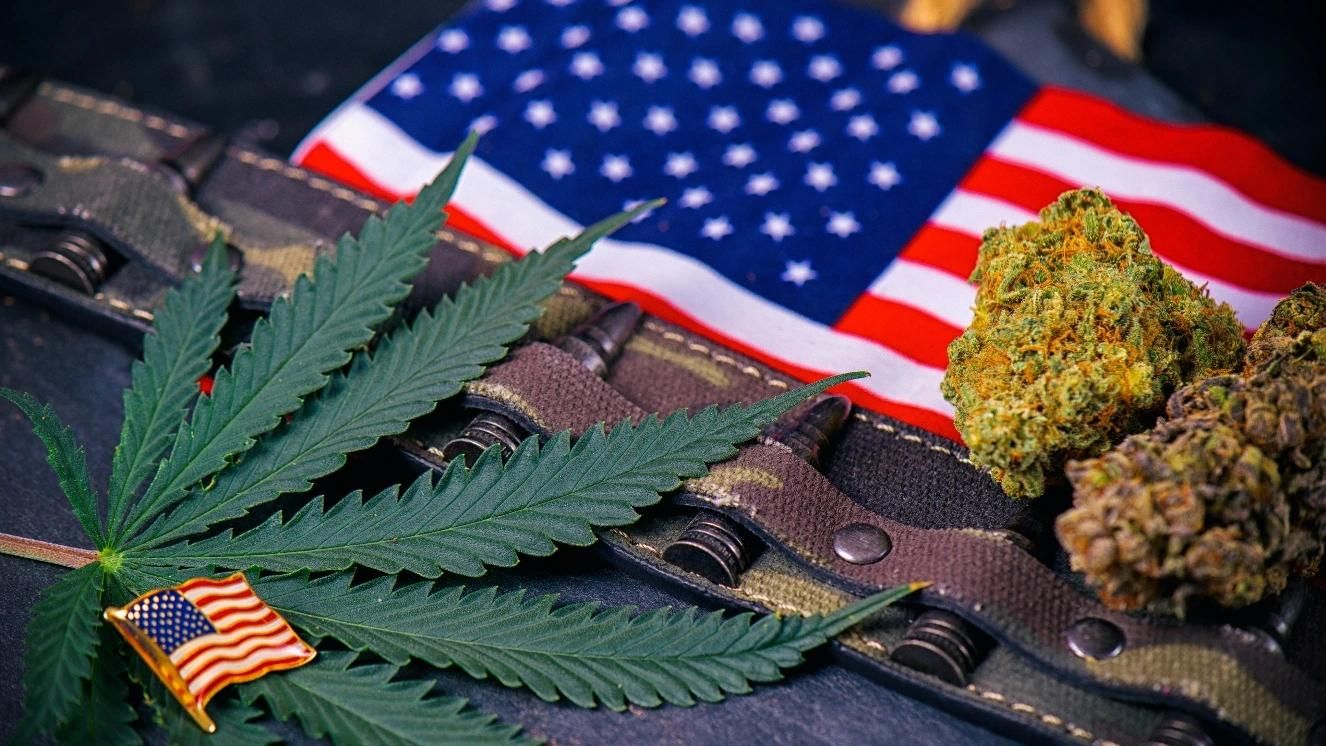
VA Clinicians and Cannabis: Veterans' Pain Relief Debate

For nearly a decade, my dad managed pain with morphine and a fentanyl patch. These eased his agony but also dulled him, taking away precious time and presence.
I often wonder if medical cannabis could have eased his pain without dulling his clarity. Many Veterans now face a similar choice: pharmaceuticals that can cause sedation, or a plant-based option that helps many keep more of their day.
His fogged-over afternoons remind us why clarity of mind must sit alongside pain relief, offering a lesson in seeking alternatives that preserve both presence and well-being.
Veterans' Challenges with VA Cannabis Policies
Chronic pain affects nearly half of all Veterans, and opioids have long been the main treatment despite serious risks, including overdose. Veterans with multiple prescriptions or PTSD are especially vulnerable.
Cannabis does not slow breathing, so overdose is less likely than with opioids. Systematic reviews by the National Academies and peer-reviewed studies in top medical journals suggest cannabis can reduce chronic pain in adults.
One noteworthy randomized controlled trial published in the Journal of Pain in 2024 found that cannabis significantly reduced chronic pain levels in Veterans over a 12-week period compared to a placebo.
Another longitudinal study in the Annals of Internal Medicine in 2023 tracked chronic pain relief and improved quality of life over a six-month period among Veterans using cannabis, helping to confirm its long-term efficacy and safety.
For many Veterans, this means a potential option for relief without the same level of sedation.
Veterans' Perspectives on Cannabis Benefits
Relief looks different across generations. In a 2025 JAMA Network Open study of more than 4,500 Veterans aged 65–84, over 14% reported cannabis use in the past year, most often for pain or sleep.
For a Vietnam Veteran in his seventies, cannabis wasn’t about escape; it was about finally sleeping through the night without jolting awake from nerve pain. He describes feeling the cool, smooth texture of his sheets as he slides into bed, the sensation uninterrupted by the familiar, jarring awakening that comes with the morning. It was the first time in years he could rest easily through the night.
Younger Veterans echo the same needs. Surveys by Iraq and Afghanistan Veterans of America show strong support for medical cannabis research and legalization, and the American Legion backs these calls.
This support is mirrored in Congress, where bipartisan bills aim to allow VA clinicians to recommend cannabis for medical use in states where it is legal, signaling a convergence of public demand and legislative action.
For Veterans with PTSD, the picture is complex. A federally funded day-level study found that Veterans reported lower PTSD symptoms and less negative mood on days they used cannabis.
But frequent, heavy use can worsen depression and anxiety over time. VA’s National Center for PTSD is clear: short-term relief is real, but evidence for long-term benefit remains insufficient to recommend cannabis as a stand-alone treatment.
“Veterans already use cannabis to treat their war-time wounds—visible and invisible.” — Iraq & Afghanistan Veterans of America.
VA Clinicians' Role in Cannabis Treatment Debate
Policy debates echo in exam rooms. As patients seek answers, clinicians must navigate the complexities of medical ethics and legal barriers.
VA clinicians see that cannabis helps some Veterans, but are limited by current policy—they can discuss but not recommend it officially.
In 2025, both the House and Senate advanced bills that could let VA clinicians recommend cannabis to Veterans in states where it is legal. If these bills are passed and signed into law by fall, Veterans could start receiving recommendations by winter.
For now, clinicians can give advice but cannot make official recommendations until VA policy is formally updated.
One VA provider put it simply: “We can discuss how marijuana may interact with your medications or mental health—even if we can’t complete the forms." Advocates say that’s a start, but more is needed.
Normalizing the Plant
Learning about cannabis’s chemistry can reduce stigma.
For example, linalool (also found in lavender) provides a calming effect, and β-caryophyllene (present in black pepper) can sharpen focus. Relating cannabis components to familiar sensations reframes the conversation from stigma to biology.
Terpenes such as β-caryophyllene may reduce inflammation, while α-pinene can help with attention. Recognizing these compounds in everyday plants frames cannabis in familiar, biological terms rather than through stigma.
Terpene Comparison Chart

Why This Matters
By connecting terpenes to everyday foods and herbs, cannabis becomes less about stigma and more about science. Veterans can walk into a clinic and say, “I respond better to calming terpenes like linalool”—the same compound in lavender tea—without feeling they’re breaking taboos.
For clinicians, this shared vocabulary is a bridge. Instead of vague talk about “strains,” conversations can center on effects, goals, and safe use—just like any other therapy.
“Terpenes show cannabis isn’t just about THC or CBD—it’s everyday chemistry veterans already know from their kitchens.”
Open Dialogue on Cannabis Use Among Veterans
Conversations about cannabis don’t need to feel like confessions. There is no shame in seeking the best treatment for you. In a VA clinic, this exchange can be as ordinary as updating a blood pressure log. Here’s how that conversation might flow:
Veteran: “I’ve been using cannabis for my back pain. Can you check how it interacts with my meds?”
Clinician: “Of course. Let’s review your prescriptions and talk about safe use.”
At home, it can be just as natural:
Spouse: “I’ve seen you using cannabis more. Can we track how it affects your sleep and mood together?”
Veteran: “Yes. Let’s write it down weekly and share it at my next VA visit.”
Simple, everyday conversations like these help remove shame and prioritize safety. Families already keep track of pillboxes, meal plans, and appointments. Cannabis can be easily incorporated into a regular care routine.

VA Guidelines for Safe Cannabis Use
Responsible cannabis use starts with establishing empowering micro-habits. Try starting with a low dose of 2.5 mg and waiting two hours before considering an increase.
This measured approach helps you gauge the effects responsibly, especially with potent products. Consider integrating a journaling practice that connects your cannabis use with personal life goals, not just symptoms.
For example, log doses alongside goals like 'play catch with my grandchild' or 'attend a family dinner without discomfort.' By linking micro-habits to meaningful life markers, tracking becomes a tool for enhancing quality of life, not merely a clinical exercise.
Some drugs, like warfarin and clobazam, use the same metabolic pathways as cannabinoids, so cannabis can affect how they work, sometimes seriously. It is crucial to discuss your entire treatment protocol with your doctor. Including current or potential cannabis use.
Mixing cannabis with opioids, benzodiazepines, or alcohol increases sedation and risk of serious side effects.
Veterans should track more than just pain levels. It is also helpful to monitor sleep, daily activity, mood, and time spent with family, since these are all signs of overall well-being.
Where the Science is Headed
Policy and science are both shifting. In 2025, appropriations riders have been proposed in the House and Senate to allow VA clinicians to recommend cannabis if it is legal in their state.
For these policy changes to take effect, Congress must pass final appropriations bills, the President must sign them, and then the VA needs several months to create and release updated guidance to its clinicians.
With each step—congressional approval, presidential signature, and VA implementation—the timeline can stretch across several months before veterans can access new recommendations. This implementation may occur in conjunction with other federal policy changes.
The Department of Justice has also proposed rescheduling cannabis to Schedule III, which would recognize medical use and ease research barriers. This change must undergo an agency review, a public comment period, and final approval—a process likely to take multiple months. However, even after federal rescheduling, VA policy will require its own update before doctors can officially recommend cannabis. This agency process will require additional time after any federal change is finalized.
Meanwhile, research is starting to catch up. Studies of Veterans with PTSD show they have fewer symptoms on days they use cannabis, while large studies of older adults show both benefits and risks, such as cannabis use disorder. Overall, the evidence suggests cannabis is not a cure-all or a danger. It is a therapy that needs clear guidance, honest monitoring, and informed consent for Veterans of all ages.
Collaborative Efforts in Veterans' Cannabis Care
I can’t change my dad’s story, but I can help shape the stories of Veterans living with pain today.
For many, cannabis is about finally sleeping through the night, walking without pain, or being present with family. Options extend beyond stereotypes: topicals, drinks, mints, and candies exist, with terpene profiles that can offer non-psychoactive effects. Yet, stigma persists.
This isn’t about taking sides in culture debates. It’s about clinical ethics and ensuring Veterans have access to a range of options that may help reduce suffering while maintaining their quality of life. Policy can adapt to better serve patients, allowing VA clinicians to recommend cannabis where legal, guided by available evidence and oversight.
How will we measure success when relief meets readiness? By rallying policymakers, clinicians, and Veterans together toward a shared goal, one crucial step is establishing a national registry to track patient outcomes and experiences with cannabis. Additionally, organizing a letter-writing campaign directed at policymakers could amplify the voices of Veterans on this issue. Are we ready to redefine success through collaboration and commitment to comprehensive care?
Ultimately, Veterans deserve more than just a handful of pills. They should have every available opportunity to pursue well-being with clarity and dignity, making informed choices, supported by both science and compassion. Cannabis isn’t a cure-all, and opioids aren’t villains. Veterans deserve every safe tool the science supports—and every day of life it gives back.
Continue Reading

Marijuana for Pain Relief: Pros and Cons for Veterans & the VA's Thoughts
Lifestyle
FDA Approves Cannabis Study for Veteran PTSD Treatment
Lifestyle
CBD vs THC: Natural Solutions for Veteran Health
Lifestyle
Join the Conversation

BY NATALIE OLIVERIO
Veteran & Senior Contributor, Military News at VeteranLife
Navy Veteran
Natalie Oliverio is a Navy Veteran, journalist, and entrepreneur whose reporting brings clarity, compassion, and credibility to stories that matter most to military families. With more than 100 published articles, she has become a trusted voice on defense policy, family life, and issues shaping the...
Credentials
Expertise
Natalie Oliverio is a Navy Veteran, journalist, and entrepreneur whose reporting brings clarity, compassion, and credibility to stories that matter most to military families. With more than 100 published articles, she has become a trusted voice on defense policy, family life, and issues shaping the...