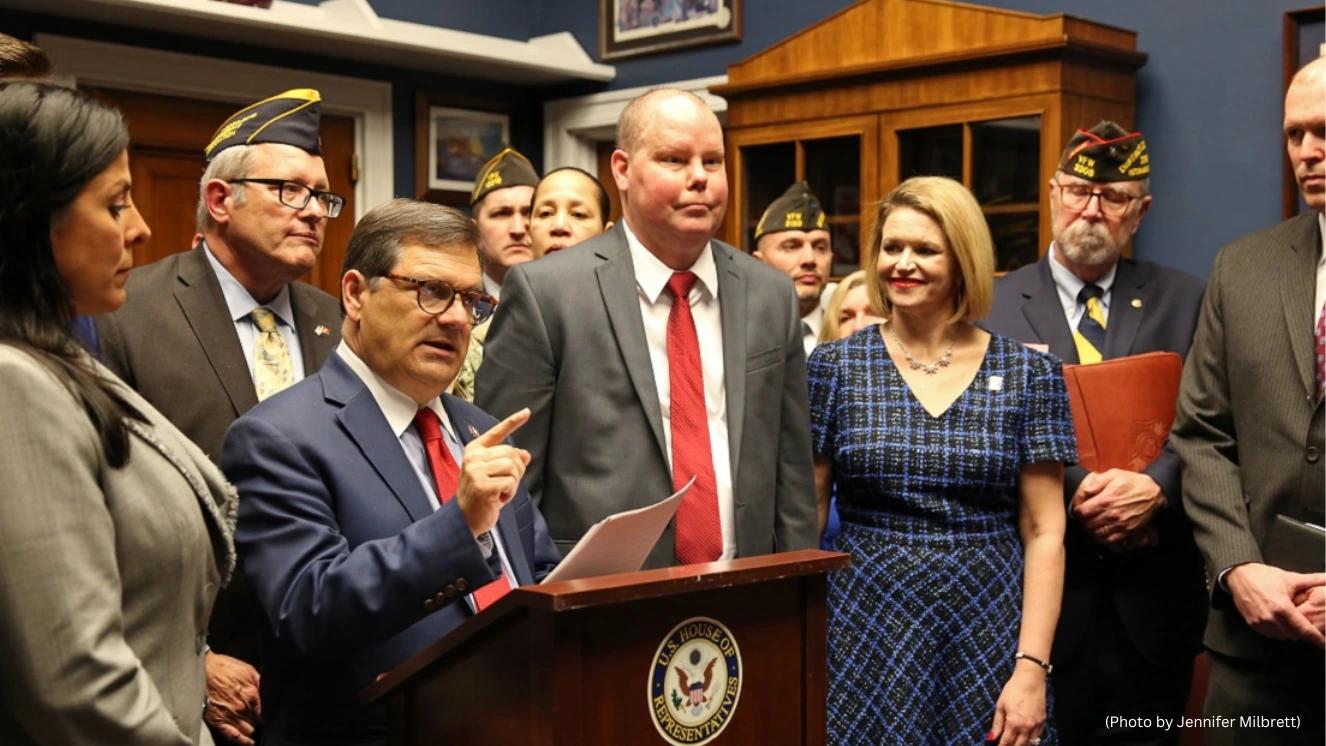
One Senator Blocked a Vote on the Major Richard Star Act. Why 50,000 Combat-Injured Veterans Are Still Waiting

Army Major Richard Star spent years fighting lung cancer linked to burn pit exposure. After exhausting days meeting with lawmakers and staffers on Capitol Hill, he would sometimes pause in a hallway, stifling a cough as he caught his breath. Even on days when a chemo appointment reminder beeped on his phone, he insisted on keeping his advocacy meetings, clutching a folder of documents to make his case in person.
Even as his health declined, he pushed lawmakers to fix a policy that reduced retirement pay for certain combat-injured veterans forced to leave the military early. Despite his efforts, he died in 2021. The legislation bearing his name continues to move through Congress, reflecting his lasting influence.
For Some Combat-Injured Veterans, the Debate Shows Up in Their Paychecks
For many combat-injured Veterans, the policy fight over military retirement benefits shows up where they least want it to: in their monthly retirement checks.
Service members whose careers end early because of combat-related injuries can be medically retired before reaching the 20-year mark required for a traditional military retirement. In these cases, current law can reduce their retirement pay if they receive VA disability compensation, creating added financial strain.
For example, a typical medically retired enlisted Veteran who might expect $1,800 per month in retirement pay could lose all or nearly all of that sum to the offset if their VA disability compensation is of equivalent or greater value. This means some Veterans see little or no retirement income each month, making it difficult to plan and meet everyday expenses.
Current law directs the Department of Defense not to pay Veterans forced to medically retire due to combat injuries their full retirement pay, along with their full disability compensation from the VA. Instead, the government offsets their retirement pay dollar-for-dollar by the disability pay they receive. As a result, some Veterans receive no retirement benefits at all.
Advocates argue the policy forces injured Veterans to trade one earned benefit for another, because the injuries that ended their careers came “too early” to count for full retirement. For Veterans affected, the policy debate in Washington plays out every month when their retirement check arrives smaller than expected.
As one affected Veteran put it, "The first time I saw my retirement check was less than my final active duty pay, it felt like a punch in the gut. I gave everything I had, but it still wasn't enough for full benefits."
This long-running dispute prompted lawmakers to introduce the Major Richard Star Act to end the offset and provide service members with the full benefits they deserve. The legislation unites advocates across the Veteran community and draws widespread bipartisan backing.
Still, the Star Act forms part of a broader legislative struggle over 'concurrent receipt' of military retirement and disability pay. Similar efforts in past years have stalled for various reasons, revealing the complicated politics behind fixing this issue. Comparing the Star Act to other attempts also clarifies why even 77 cosponsors do not guarantee swift passage; the cumulative cost and broader implications keep the legislative battlefield crowded and contentious.

The Senate Moment That Stopped the Bill
On March 3, Sen. Richard Blumenthal attempted to advance the Major Richard Star Act by unanimous consent, a process in which any senator can silently veto the bill before a vote. This procedure allows the Senate to approve legislation quickly if no senator objects. The bill appeared to have broad support. It currently has 77 Senate cosponsors, an unusually large bipartisan coalition.
But unanimous consent requires agreement from every senator present. Before the request could be approved, Sen. Ron Johnson objected. That single objection immediately stopped the effort. Blumenthal then proposed a second option: a procedural agreement guaranteeing one up-or-down vote before August, requiring 60 votes for passage.
With those options blocked, supporters may look to upcoming committee markups or to attach the Star Act to larger legislative packages as a next step, keeping the issue in play on Capitol Hill.
Johnson objected again. The Senate never voted on the legislation.
What the Major Richard Star Act Would Change
The Major Richard Star Act specifically impacts Veterans who were forced to medically retire due to combat injuries before completing 20 years of service. The bill seeks to eliminate the reduction in retirement pay these veterans face when they also receive VA disability compensation. If passed, these combat-injured Veterans would receive both their full military retirement pay and their full VA disability compensation without offsets.
Supporters say the offset misunderstands what the two benefits represent. Military retirement pay reflects years of service and career earnings. VA disability compensation addresses injuries caused or aggravated by military service.
Advocacy groups say the policy impacts a considerable number of medically retired Veterans. The Military Officers Association of America estimates that more than 50,000 combat-injured Veterans are currently affected by the offset. To put that in perspective, that's enough veterans to fill nearly every seat in Yankee Stadium, or about the same as the entire population of a mid-sized American city. Visualizing a crowd of that size makes it clear how many lives this policy directly touches.
The Cost Debate
Opponents of the legislation have raised concerns about federal spending. During the Senate floor exchange, Johnson argued that the proposal would cost roughly $10 billion to $12 billion over 10 years and should move through the standard legislative process rather than by unanimous consent.
The Senate Veterans’ Affairs Committee estimates the bill would cost roughly $11 billion over ten years. For context, this amount is comparable to the cost of providing annual military retirement benefits for a single branch of service over the same period.
In a single recent fiscal year, the Department of Defense reportedly spent more than $60 billion on military retirement pay across all services. Comparing the Star Act’s ten-year $11 billion projected price tag to these figures can help put its scale and feasibility into perspective.

Why Veterans Groups Reacted So Strongly
Veterans organizations contend that the bill addresses a long-standing inequity affecting service members whose careers ended because of combat injuries. Groups including the Veterans of Foreign Wars, the Military Officers Association of America, and the Wounded Warrior Project have spent years lobbying Congress to resolve the offset.
After the Senate objection halted the bill, VFW National Commander Carol Whitmore issued a blunt response, “Stop the procedural games and pass the Major Richard Star Act now.” Yet even as advocacy groups intensify their calls for action, fiscal skeptics remain unconvinced. What financial guardrails would satisfy those concerned about the potential cost, and how might a compromise be found without undermining support for combat-injured Veterans?
The Wounded Warrior Project reminds advocates and veterans that Congress can stop the “wounded veteran tax” by passing the Major Richard Star Act.
Why the Legislation Keeps Stalling
While the Major Richard Star Act has strong bipartisan support, it has now been blocked multiple times from moving through the unanimous consent process.
Attempts to advance the bill were blocked in October 2025 and again on March 3, 2026, when an objection halted the effort before the Senate could vote. The Military Officers Association of America also notes that the proposal was offered during the FY2026 National Defense Authorization Act process but did not make it into the final defense bill.
That does not mean the legislation is dead. Looking forward, the bill faces a few decisive moments.
First, it must advance past a committee markup; next, leaders would need to schedule floor time for debate and a vote; and if the measures succeed in both the House and Senate, any differences would be reconciled by a conference committee before the bill could become law. It does mean broad bipartisan support alone has not yet been enough to secure final passage in the Senate.
Join the Conversation

BY NATALIE OLIVERIO
Veteran & Senior Contributor, Military News at VeteranLife
Navy Veteran
Natalie Oliverio is a Navy Veteran, journalist, and entrepreneur whose reporting brings clarity, compassion, and credibility to stories that matter most to military families. With more than 100 published articles, she has become a trusted voice on defense policy, family life, and issues shaping the...
Credentials
Expertise
Natalie Oliverio is a Navy Veteran, journalist, and entrepreneur whose reporting brings clarity, compassion, and credibility to stories that matter most to military families. With more than 100 published articles, she has become a trusted voice on defense policy, family life, and issues shaping the...