SPAIN DRAWS A LINE: NO US STRIKES ON IRAN FROM SPANISH SOIL
COMMENT
SHARE

When the United States and Israel launched coordinated military strikes against Iran on Saturday, February 28, 2026, a lesser-noticed but diplomatically significant story was unfolding in southern Spain. The Spanish government, under Prime Minister Pedro Sanchez, moved swiftly to declare that American forces stationed at two joint military installations — Naval Station Rota and Moron Air Base — would not be permitted to participate in or support offensive operations against Iran. It was a statement of national sovereignty as much as it was a moral position, and it placed Madrid squarely at odds with Washington at one of the tensest moments in recent Middle Eastern history.
Spanish Foreign Minister Jose Manuel Albares made the government's stance unambiguous in a television interview on Monday, March 2. The bases at Rota and Moron, he explained, are jointly used by Spanish and American forces but remain firmly under Spanish sovereignty. Any use of those facilities must fall within the terms of the bilateral defense agreement between the two countries, and critically, must be consistent with the United Nations Charter.
Offensive military action against Iran, in the Spanish government's view, meets neither of those thresholds. Defense Minister Margarita Robles went further, stating emphatically that no assistance of any kind — "absolutely none" — had been provided from either base in connection with the Iran strikes. The message was clear and deliberate.
Operational Shifts and the U.K. Contrast
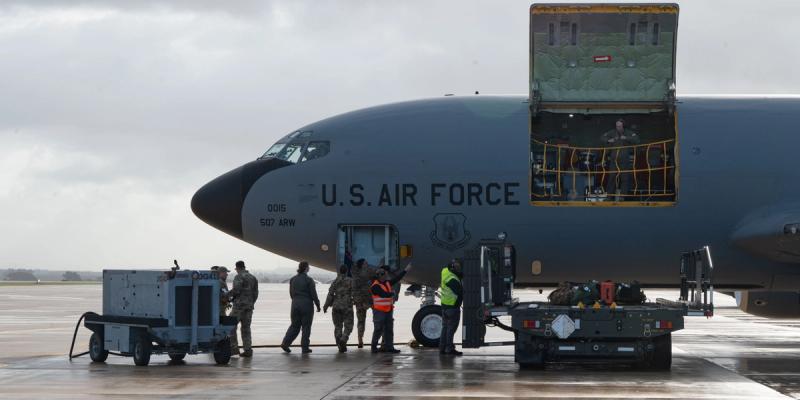
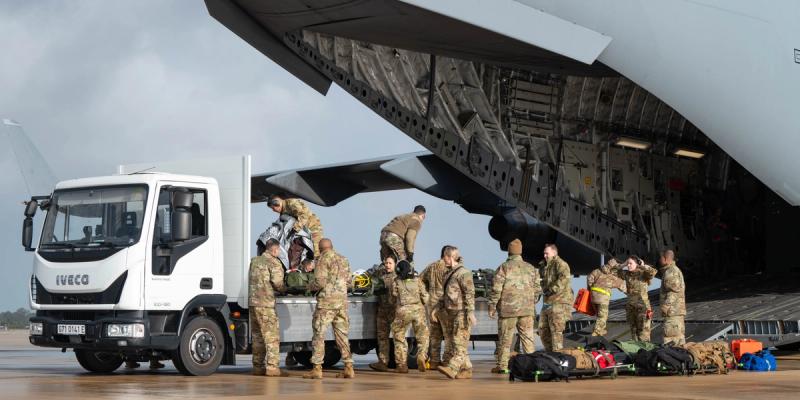
The practical consequences were immediate. Flight tracking data from FlightRadar24 showed that fifteen US aircraft departed Rota and Moron in the days following Spain's declaration. Nine KC-135 refueling tankers left Moron Air Base and were tracked heading toward Germany, while other aircraft departed Rota toward southern France. At least seven planes were confirmed to have landed at Ramstein Air Base in Germany. The movement of American assets out of Spain underscored the seriousness with which both sides treated the restriction. This was not merely a diplomatic statement. It had short-term operational implications for the US military's posture in the western Mediterranean.
Spain's position stands in contrast to that of the United Kingdom, which initially hesitated but ultimately authorized the use of British military bases for what Prime Minister Keir Starmer framed as collective self-defense. That decision coincided with an attack on British forces, though the narrative is complex: a drone struck the British air base RAF Akrotiri in Cyprus, causing limited damage. However, the UK Ministry of Defence confirmed the drone was not launched from Iran, and officials noted the drone was in the air before Starmer announced the base authorization, contradicting claims of direct retaliation.
Nonetheless, Spain, by refusing to become operationally entangled in the conflict, has so far avoided having its installations become direct targets. Whether that reflects wise statecraft or simply good fortune remains to be seen, but it illustrates the tangible risks that come with military participation.
Trade Threats and the Oval Office Fallout
The Spanish government's condemnation went beyond the base's question. Prime Minister Sanchez publicly characterized the US and Israeli strikes on Iran as an "unjustified" and "dangerous military intervention" that falls outside the bounds of international law. This represents a significant break from the position of many NATO allies and reflects the particular political orientation of Spain's coalition government. Sanchez has consistently positioned himself as a critic of offensive military action, previously taking an independent stance on the conflict in Gaza.
Washington's reaction was predictably hostile. Speaking from the Oval Office on March 3 during a meeting with German Chancellor Friedrich Merz, President Donald Trump threatened to impose a full trade embargo on Spain in response to Madrid's refusal, directing his Treasury Secretary to cut off dealings.
Legal experts and EU officials, including Chancellor Merz, were quick to note that any such embargo would face enormous legal hurdles since Spain is a member of the European Union and trade policy is largely an EU-level matter. However, the threat itself reveals President Trump’s views on Spain's defiance.
Trump's warning sent a chill through Spanish and European business communities, prompting companies to quietly begin drawing up contingency plans even as legal advisers cautioned that a genuine embargo remained highly unlikely.
The Future of Alliance Cohesion
At the heart of this dispute is a foundational question about the nature of alliance relationships and military basing rights. Rota and Moron are jointly operated facilities, but they sit on Spanish soil, and the agreements governing their use have limits. The US has long operated under a somewhat expansive interpretation of what allied basing arrangements permit, and tensions over the scope of those rights are not new. What is notable here is the forcefulness and speed with which the Sanchez government acted. The US, for its part, moved aircraft to other European bases, so at the moment the dispute has little operational impact.
The broader implications for the US-Spain relationship, and for NATO cohesion more generally, remain to be worked out. Alliances depend on shared commitments and predictability, and Spain's refusal to permit the use of its bases for what Washington considers a legitimate security operation will leave a mark on the bilateral relationship.
It’s also not the first time a European and NATO partner has declined to participate in an American military operation. Allied countries have their own constitutional and public responsibilities, and domestic politics is always a consideration. For its part, Spain is making an argument based on their view of international law, UN Charter obligations, and the specific terms of existing defense agreements.
The Spanish government’s position, mirrored by other NATO alliance members, is that alliance membership does not mean unconditional support. Spain believes that all NATO partners retain the right and the responsibility to define the limits of their participation. The bases at Rota and Moron are instruments of collective security.
The North Atlantic Alliance has been the foundation of Western security for eighty years, and disputes between members over military commitments are not new to it. How this particular impasse is resolved remains to be seen. What is less certain is what the US-Spain relationship looks like when it is.
Suggested reads:
Join the Conversation

BY MICKEY ADDISON
Military Affairs Analyst at VeteranLife
Air Force Veteran
Mickey Addison is a retired U.S. Air Force colonel and former defense consultant with over 30 years of experience leading operational, engineering, and joint organizations. After military service, he advised senior Department of Defense leaders on strategy, readiness, and infrastructure. In additi...
Credentials
Expertise
Mickey Addison is a retired U.S. Air Force colonel and former defense consultant with over 30 years of experience leading operational, engineering, and joint organizations. After military service, he advised senior Department of Defense leaders on strategy, readiness, and infrastructure. In additi...