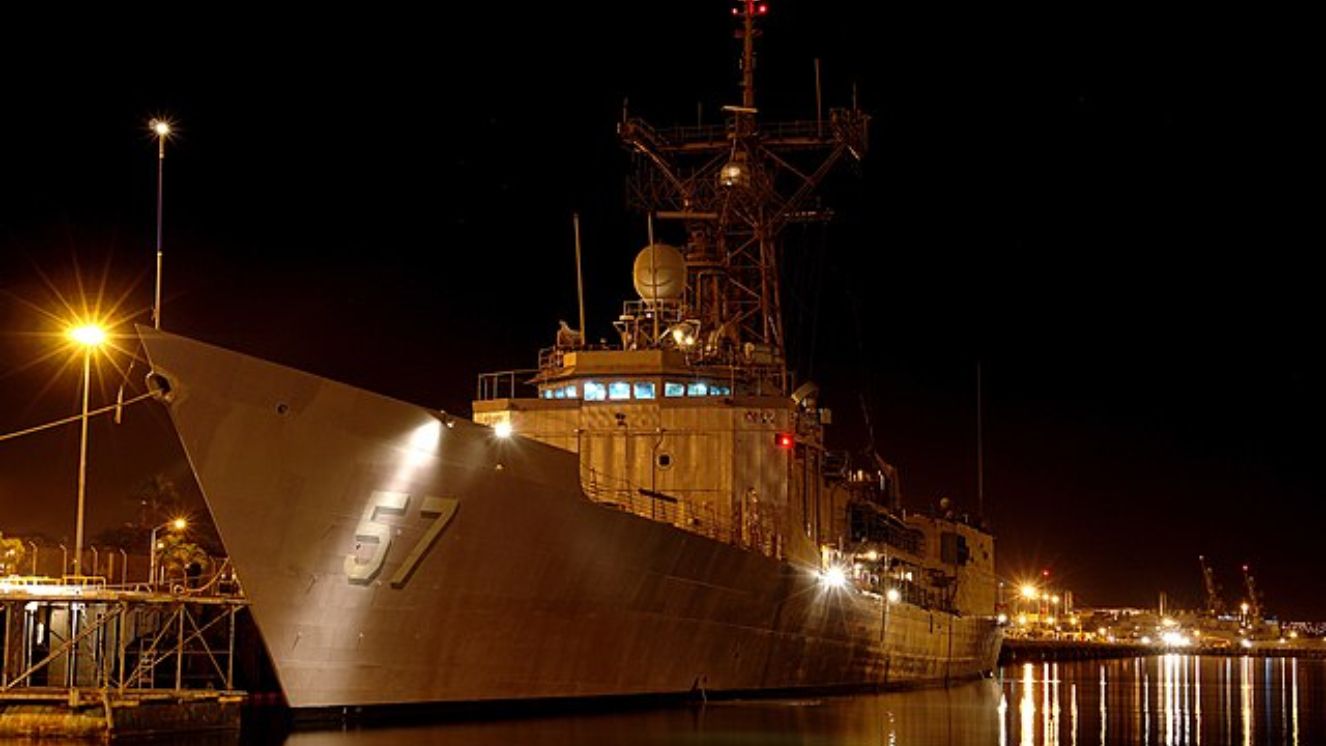
The Sinking of the USS Panay: The Forgotten First Clash with Imperial Japan

The planes struck, strafed, and bombed the American Navy vessel so unexpectedly that some of the crew scrambled topside and returned fire before they even had time to put on their pants. It was an unprovoked, overwhelming attack by the forces of Imperial Japan that ended with multiple vessels sunk and the loss of multiple civilian and military lives.
Some speculated the bloody incident would trigger an all-out war between the US and Japan. But, in the end, it did not. Because this all took place in December of 1937, four years before the infamous attack on Pearl Harbor, when the Japanese sank the Navy gunboat USS Panay on the Yangtze River during their attack on the Chinese city of Nanking. An event that did not directly lead to America’s entry into the then-incipient Second World War but was the first military engagement between the United States and the Empire of Japan.
The History of the US Navy in China
The presence of US Navy gunboats in the waterways of China dates back to the mid-nineteenth century and the end of the First Opium War. The conflict, fought between China and Britain, ended in 1842, with a British victory and a treaty, giving them an increased trading presence in the country.
During the treaty negotiations, American representatives sought similar access, resulting in a treaty between the US and China opening several of the latter country’s ports to the former in 1844.
In order to protect American interests and individuals doing business in the region, the US Navy became a constant presence on the seas, coasts, and rivers in and around China. Many such vessels were riverine craft set to patrol the vital Yangtze River, the longest river in China (and the third longest in the world).
The American naval presence on the river was officially dubbed the Yangtze Patrol in December of 1919. The USS Panay, commissioned on September 10th, 1928, was one of many river gunboats constructed specifically for this unique mission.
The War Between Japan and China
The Second Sino-Japanese War began as a result of tensions in Manchuria, a region of northeastern China that, since 1915, the Japanese had semi-official control over.
Starting in the late 1920’s a series of escalating incidents and clashes occurred, but Japan had a major advantage in maintaining control as China, at the time, was in the midst of a great deal of civil strife between nationalists and communists.
But that changed in December of 1936 when several nationalist generals forced their leader, Chiang Kai-shek, to ally with the communists against Japan. On July 7th of the following year, the two sides fought their first armed skirmish near the Marco Polo Bridge near Beijing, beginning the war in earnest.
The Japanese Capture of Nanking
At the time the war broke out, the city of Nanking (sometimes spelled Nanjing) served as China’s capital, which understandably made it a priority target for the Japanese. In early December of 1937, knowing that the enemy forces were en route, Chiang ordered his troops out of the city, leaving the local civilians virtually undefended.
On the 13th, the Japanese arrived and quickly overwhelmed the few ill-trained auxiliary troops left to defend the city. The battle quickly went from a combat situation to a slaughter. As a somewhat family-friendly site, we won’t dive too deeply into the details of what happened on those bloody, brutal days in 1937. But suffice to say, the events were horrific enough to earn the battle’s aftermath the appalling and wholly justified nicknames “The Rape of Nanking” and “The Nanking Massacre.” Estimates of the dead range from 100,000 to 300,000.
As Japanese forces drew closer to Nanking, most foreign ambassadors in the city decided to evacuate their embassies and remove themselves, their families, and their staff from harm’s way. For his part, American Ambassador Nelson T. Johnson had departed the city in late November with much of his staff.
By December 8th, the last remaining embassy personnel (as well as several American and European journalists, including two film camera-carrying newsreel photographers) boarded an American vessel that had remained in the city in the event they needed to flee as well: the Panay.
And as Japanese bombs and shells began to fall on Nanking, her captain, Lieutenant Commander James J. Hughes, weighed anchor and started steaming upriver.

The Attack on the USS Panay
By the morning of December 12th, the Panay, still travelling upriver, had taken three tankers belonging to the Standard Oil Company (the Meiping, Meihsia, and Meian) under her protection to form a small convoy. Flying an 18-foot-long American flag in addition to having the stars and stripes painted on the awnings over her deck, the Panay and her crew understandably believed the combatant forces in the area would avoid firing on her. So, when they spotted a trio of Japanese aircraft flying towards them, they had little cause for alarm.
Until, of course, those planes dropped their bombs, destroying the Panay’s forward 3-inch gun, pilot house, and radio equipment and severely wounding several aboard her, including the captain, who had to turn over command to his executive officer, Lieutenant Arthur F. Anders. They also hit the Meiping, setting the tanker ablaze for a short time.
By the time a second wave of Japanese bombers swooped in to attack a few minutes later, the Sailors aboard the Panay were ready. Crewmen manned the .30 caliber machine guns on the boat's deck (some of them, as mentioned earlier, sans trousers in full view of the enemy and those camera crews onboard) and opened fire on the enemy aircraft. Alas, these defensive efforts had little effect.
The Japanese bombs and bullets inflicted further casualties on the Sailors and civilians aboard the American ships. Storekeeper First Class Charles Lee Ensminger of the Panay and oil tanker captain Carl H. Carlson died during the attack, while coxswain Edgar C. Hulsebus and Italian reporter Sandro Sandri suffered fatal wounds that they later died of.
The wounded also included Lieutenant Anders, who was first hit in the hands and then struck in the throat by shrapnel that rendered him incapable of speech and forced him to issue his orders in writing. While the crew did what they could to fight back and try to keep their vessel afloat, it soon became apparent that she was a lost cause.
With the gunboat sinking and most of the surviving crew wounded, Lieutenant Anders gave the (written) order to abandon ship. The crews of the oil tankers attempted to continue on their own, but all three ships were eventually forced ashore where their crews (and several Panay sailors who were aboard the Meiping during the attack) were either picked up by non-hostile Japanese troops and sent to Shanghai or rescued by the British Navy gunboat HMS Bee.
USS Panay Survivors Escape
Even with Japanese aircraft continuing to strafe the sinking ship, her crew, and her passengers as they motored ashore in small boats in several trips, they miraculously inflicted no further fatalities.
Upon reaching the riverbank, the Panay survivors hid in the reeds along the water and watched as a pair of boats carrying Japanese troops approached their crippled vessel, hit her with a burst of machine gun fire, and briefly boarded her. A short time after, a few minutes before 4 pm local time, the USS Panay disappeared bow-first beneath the waters of the Yangtze.
With all the Navy officers seriously wounded, command of the survivors fell to US Army Captain Frank Roberts, an assistant military attaché from the embassy who spoke Chinese fluently. Carefully making their way through the swampy wetlands around the river for fear that the Japanese might attempt to eliminate them, the group made it to the nearby village of Hohsien around midnight.
With the assistance of the locals, Roberts and the others remained hidden and continued treating the wounded until their rescue by a pair of British gunboats two days later: the same HMS Bee that earlier picked up several survivors and the HMS Ladybird.
The Aftermath of the USS Panay Sinking
As news of the ship’s sinking reached the United States, the American public responded with shock and outrage. The British shared that anger towards the Japanese; while none had been sunk or suffered any serious casualties, four of their ships near Nanking (including the Bee and Ladybird) were also subjected to bombing or shelling the same day as the Panay’s sinking.
The footage and photographs taken of the attack and aftermath by the journalists aboard the gunboat provided people with graphic images of the fight and the suffering of the wounded, further incensing them. The Japanese claimed the incident was simply a terrible accident and a case of mistaken identity, but the obvious indicators that the lost gunboat was an American vessel led many to question if the attack was intentional.
Regardless, Japan issued a formal apology and paid the United States a little over $2.2 million in compensation, bringing the matter to an official close. But the next time planes of Imperial Japan sank a US Navy ship, the simmering conflict between the two nations would explode into all-out war.
On a final, interesting note: While the details of the later lives of most Panay Veterans are not widely known, her executive officer is a fascinating exception.
Lieutenant Anders survived his wound (after literally coughing up the shrapnel in his neck), received the Navy Cross for his actions that day, and lived long enough to see his son grow up, attend the US Naval Academy, join the Air Force, become an astronaut, make history as one of the first three humans to orbit the Moon, and take arguably one of the most awe-inspiring photographs ever captured on film (perhaps even more so than a screenshot of a pants-less Sailor firing a machine gun at an enemy plane).
Join the Conversation

BY PAUL MOONEY
Veteran & Military Affairs Correspondent at VeteranLife
Marine Veteran
Paul D. Mooney is an award-winning writer, filmmaker, and former Marine Corps officer (2008–2012). He brings a unique perspective to military reporting, combining firsthand service experience with expertise in storytelling and communications. With degrees from Boston University, Sarah Lawrence Coll...
Credentials
Expertise
Paul D. Mooney is an award-winning writer, filmmaker, and former Marine Corps officer (2008–2012). He brings a unique perspective to military reporting, combining firsthand service experience with expertise in storytelling and communications. With degrees from Boston University, Sarah Lawrence Coll...