Project Sea Hunt: Pigeons Aid U.S. Coast Guard Rescues

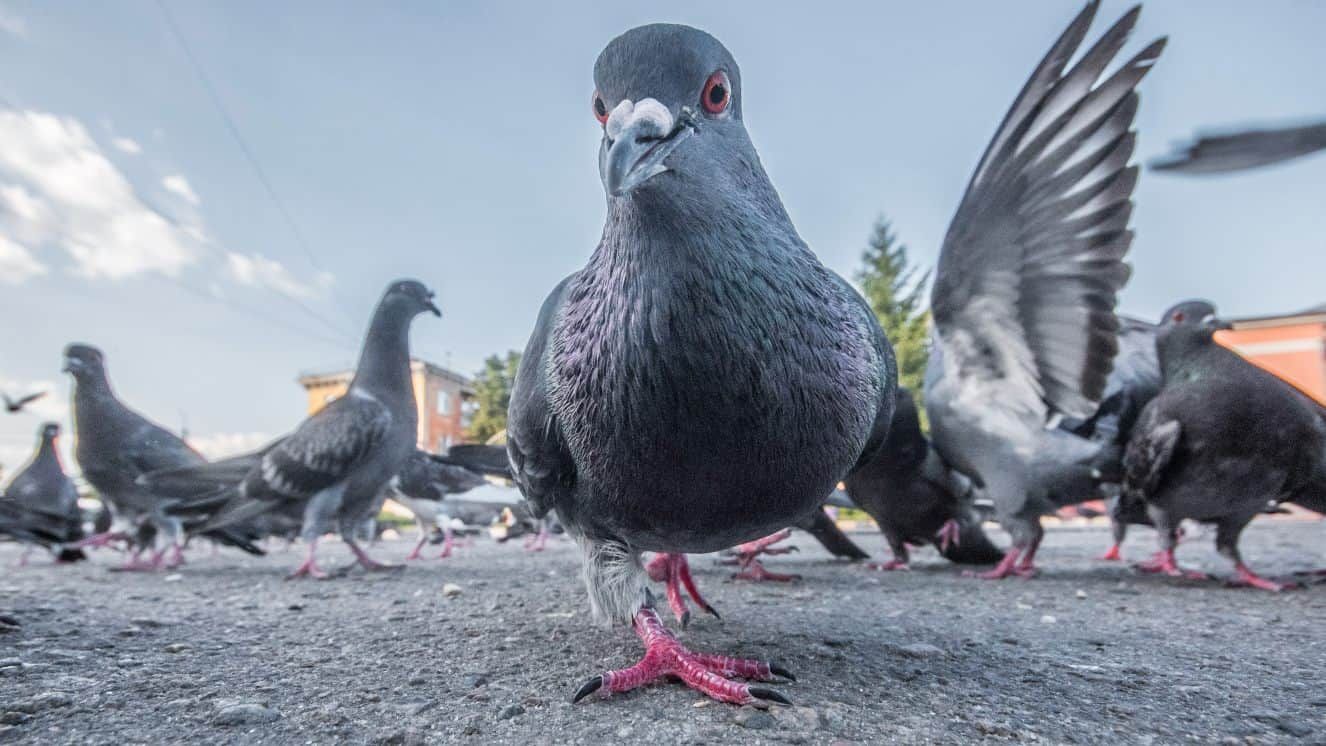
When you see a pigeon on the sidewalk, you probably just think of it as a pest. Most of us would just shoo them away. However, did you know that they actually contributed to saving the lives of people lost at sea?
You’re probably thinking that this is impossible, but back in the 1970s, the U.S. Coast Guard had a project in which pigeons were trained to spot people lost at sea. And no, we’re not kidding.
It was a real military experiment called Project Sea Hunt, and it wasn’t just for fun, because these birds sometimes did the job better than humans.
Pigeons in U.S. Coast Guard Rescues: Life-Saving Role
Trying to find someone floating in the middle of the ocean is so hard for a normal person without the correct gear, because the sea is so big that you can’t spot any living thing from above. Even if the person has a bright orange life jacket, the glare off the water makes it almost impossible to see.
The Coast Guard knew humans could only do so much because even the person with the sharpest eyes can miss things after hours of staring at the waves, so they wouldn’t be successful in spotting people.
So, what was the solution for this? Pigeons. Yep, that’s right.
Not carrier pigeons delivering messages. It was regular pigeons trained to look for shapes and colors. These pigeons were able to recognize patterns and even see colors outside of human range. So, if anyone could notice a tiny life jacket in the ocean, it was these birds.
Training Pigeons for U.S. Coast Guard Operations
When Project Sea Hunt started, the Coast Guard teamed up with the Navy. Of course, training was necessary. But how did they train these birds?
The setup for the pigeons’ training looked more like a science fair, featuring Coast Guard helicopters, and researchers created small bird “workstations” with windows that pointed down at the water.
The pigeons waited, like little feathered employees, for someone to spot them at sea so they could get their food.
“Pigeons are highly adaptive, easy to train and to maintain, and have a life expectancy of more than 10 years,” the Navy’s review added.
The Naval Ocean Systems Center trained the birds to recognize objects in colors such as red, yellow, or orange.
The training simply showed the pigeons some images of life jackets and rafts, and they would peck at a switch in the compartment. If two birds hit the switch, a light would flash on in the cockpit. At the same time, they got food. Do that enough times, and the birds get really, really good at it.
How good? Well, the pigeons spotted targets about 90% of the time. And yep, these birds were better at saving people than the people themselves.
Pigeon Effectiveness vs. Technology in Search Missions
With the training, it’s enough to question if the birds beat the machines. For a short while, yes. However, the 1970s were also a time of significant advancements in satellites, radar, and infrared technology. And they were improving fast.
The program also faced a heartbreaking setback. During one test flight, the Coast Guard helicopter carrying the pigeons had engine trouble and had to make an emergency landing. The bird station, which was mounted under the chopper, broke off on impact. Sadly, the pigeons died.
This was a reminder that these birds are living creatures that were picked to participate in human experiments. After that, the project's momentum slowed.
They shifted to using more conventional gear, such as night vision goggles, spotlights, and infrared cameras, and it ultimately prevailed.
Project Sea Hunt: Duration and Impact of Pigeon Use
The project does sound strange, because it was. But Project Sea Hunt stuck around longer than most people would guess.
It ran from the late 1970s to early 1980s, a very long time for something that started as such a wild idea. And during that time, the birds kept proving themselves.
And honestly, using animals for military jobs wasn’t new. The Navy has trained dolphins to find underwater mines. Dogs have been helping soldiers sniff out bombs for decades. And even rats have been used to track down landmines.
In that way, pigeons weren’t so different; they had their moment in the spotlight as well. And it proved that birds can outsmart both people and machines when it comes to spotting survivors at sea.
The project didn’t last forever, but while it was in place, it was effective. And it showed that sometimes the wildest ideas end up being the ones that surprise us the most.
The next time you see a pigeon around the sidewalk, don’t just think of it as a city pest, because for once, it served the country. Maybe give it a second glance, because once upon a time, their cousins were scanning the seas and saving lives.
Read next:
- Project Seal: The Secret WWII Plan That Turned Waves Into Weapons
- Operation Paul Bunyan: How a Simple Tree in the DMZ Turned Into a Global Incident
- Meet the Tunnel Rats: Fearless Soldiers Who Fought Underground in Vietnam
Sources:
Continue Reading
Project Pigeon: The Unbelievable History of War Pigeons That Guided Missiles
Military History
Join the Conversation

BY ALLISON KIRSCHBAUM
Veteran, Military History & Culture Writer at VeteranLife
Navy Veteran
Allison Kirschbaum is a Navy Veteran and an experienced historian. She has seven years of experience creating compelling digital content across diverse industries, including Military, Defense, History, SaaS, MarTech, FinTech, financial services, insurance, and manufacturing. She brings this expertis...
Credentials
Expertise
Allison Kirschbaum is a Navy Veteran and an experienced historian. She has seven years of experience creating compelling digital content across diverse industries, including Military, Defense, History, SaaS, MarTech, FinTech, financial services, insurance, and manufacturing. She brings this expertis...