How the USS Nautilus Made History and Changed the US Navy Forever

By the time she got underway the very first time, the submarine had already been a commissioned vessel of the US Navy for several months. The complexity of her design and workings, complexities that made her entirely unique, necessitated additional time spent tied to a dock on the Thames River where it runs through the town of Groton, Connecticut.
But on the morning of January 17th, 1955, her captain gave the order to cast off and set sail down the river towards the Atlantic Ocean. It being a rather historic event, given the unique properties of the sub, the Navy had provided the captain with a short, pre-written speech he was to transmit to shore to mark the occasion.
But as his ship began moving downriver, Commander Eugene P. Wilkinson opted to forgo the prepared remarks and had his communications officer issue a simple, four-word message: “Underway under nuclear power.” With that, the USS Nautilus (SSN-571), the first ship ever powered by nuclear reactor, began its groundbreaking, world-changing service to the United States of America.
Building a Nuclear-Powered Submarine
It’s not often that history can pinpoint the exact day a groundbreaking idea came into being, but the concept of powering a naval vessel, specifically a submarine, with a nuclear reactor is an exception.
On March 17th, 1939, the legendary Italian-born physicist Enrico Fermi delivered a presentation to senior officers and civilians of the US Navy explaining the current state of nuclear research and how the recent innovation of splitting atoms could lead to the creation of both devastating weapons and formidable sources of power. In the audience was Fermi’s fellow physicist Ross Gunn, a top scientist at the Naval Research Laboratory (NRL). Gunn’s interest in developing nascent nuclear technology into a propulsion system for submarines was not new, but Fermi’s talk inspired him to begin researching the possibility in earnest.
With America’s 1941 entry into WWII, Gunn (like many American physicists at the time) was assigned to work on the Manhattan Project, the US’s ultimately successful attempt to build the first atomic bombs. But with the war’s end, he returned to his propulsion development projects, but only briefly; Gunn left the NRL in 1947. But his ideas had already inspired a Navy officer and former submarine commander, then assigned to a US Atomic Energy Commission (AEC) laboratory, Captain (later admiral) Hyman Rickover. A man who, due to his efforts to power warships with the very fundamental forces of the universe, is remembered as the “Father of the Nuclear Navy.”
In 1949, Rickover took command of a new office of the AEC, the Naval Reactors Branch, and under his direction, the Navy pushed forward on developing a nuclear submarine. In 1951, Congress authorized the construction of such a vessel and later that year the Navy announced she’d be named Nautilus.
On June 14th, 1952, President Harry Truman himself laid the ship’s keel at the Electric Boat Shipyard in Groton. Her official “launch” took place almost a year and a half later, when the then-First Lady Mamie Eisenhower smashed the traditional ceremonial champagne bottle across her bow, and the still-under-construction ship slid into the Thames on January 21st, 1954. That September, the Navy formally commissioned her as a vessel in its service. Four months later, she set sail down the river at last under the command of Commander Wilkinson, her nuclear engine humming away.

The Early Career of the USS Nautilus
From Groton, the Nautilus sailed to Puerto Rico, remaining submerged throughout the entirety of the 1,381-mile, 89.8-hour long journey. No previous submarine had ever travelled so long while submerged, nor maintained such sustained high speeds.
Over the next few years, the ship carried out various tests and trials, many of which proved that the anti-submarine tactics employed by the US Navy in the Second World War were ineffective against a nuclear-powered vessel capable of staying submerged for long times and great distances.
In the spring of 1957, she conducted several weeks of operations in the waters around Bermuda alongside the USS Seawolf (SSN-575), America’s second nuclear submarine. And in August of that year, she made her first voyage to the Arctic Ocean, becoming the first sub to ever travel beneath the region’s thick, near-impassable polar ice. It would notably not be her last trip to the region.
The USS Nautilus’ Polar Mission and Later Navy Career
While her very creation and deployment were historical events in their own right, the most storied and celebrated mission carried out by the Nautilus, dubbed Operation Sunshine, began on June 9th, 1958. Then commanded by Captain William Anderson, the ship set out from Seattle with the goal of crossing the North Pole while submerged.
Stymied by the sea ice during her first attempt, the Nautilus succeeded in passing under the northern ice cap on August 1st. Two days later, on the 3rd, she crossed over the geographic North Pole. On the 7th, she returned to the surface off the coast of Greenland, successfully completing her most historic journey. For their accomplishment, President Dwight Eisenhower awarded the entire crew the Navy Presidential Unit Citation with a unique device: a gold “N.”
For the next two decades, the USS Nautilus remained an active member of the Navy’s submarine fleet. She served primarily in roles related to testing her equipment and systems, which underwent several rounds of refitting and upgrading during that time.
A rare exception occurred in 1962 when she participated in the Navy’s quarantine and blockade of Cuba during the 13-day-long Cuban Missile Crisis. On April 19th of 1979, the Nautilus set sail one final time, once again from the town of Groton. After arriving at the now-closed Mare Island Naval Shipyard in California in May, the process of deactivating the historic ship began.

The Retirement of the USS Nautilus
Though formally decommissioned in 1980, the Nautilus was not destined for the sea bottom or the scrapyard. Designated a National Historic Landmark by the Secretary of the Interior on May 20th, 1982, the government towed her back to the place of her birth on the banks of the Thames River.
Soon thereafter, she was opened to the public as the centerpiece of the Submarine Force Museum in Groton, CT, a tour-able testament to the innovative brilliance of the men and women who designed and built the submarines of the US Navy and the courage of the Sailors who served aboard them.
The Legacy of the USS Nautilus: The US Navy’s Nuclear Ships
The Nautilus may have been America’s (and, of course, the world’s) first nuclear submarine, but it was obviously not her last. In fact, by the end of 1957, every new sub the Navy commissioned was nuclear-powered. And with the decommissioning of the research vessel USS Dolphin (AGSS-555) in 2007, America’s submarine fleet has run entirely on nuclear power ever since. Additionally, the Navy also began using nuclear-powered aircraft carriers in 1961 with the commissioning of USS Enterprise (CVN-65), decommissioning their last active diesel carrier, the USS John F. Kennedy (CVA-67), in 2007.
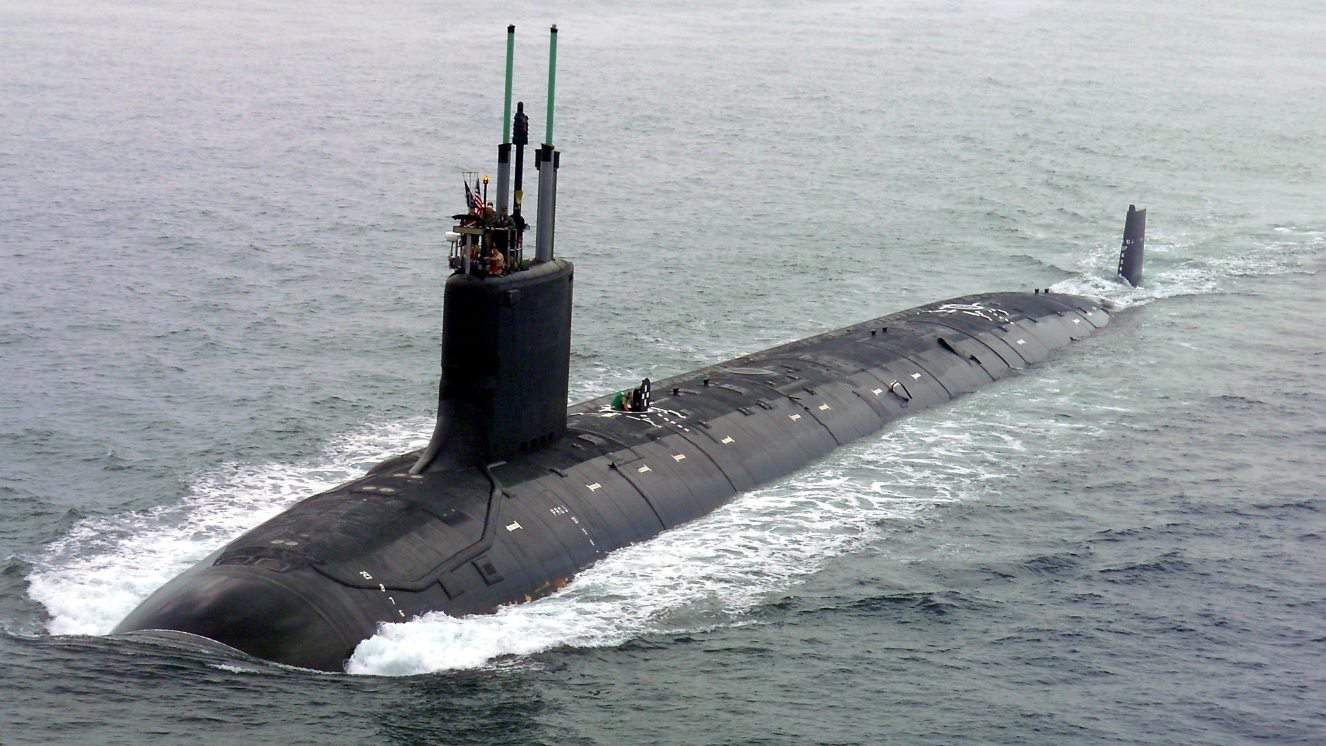
And while today’s operational Los Angeles, Seawolf, Virginia, Ohio, and in-construction Columbia class subs (not to mention the Nimitz and Gerald R. Ford class nuclear powered aircraft carriers) are a far cry from their ancestor, they all owe their existence in no small part to the USS Nautilus.
Read next:
Continue Reading
Everything You Never Knew About the History of the Military Submarine
Military History
Join the Conversation

BY PAUL MOONEY
Veteran & Military Affairs Correspondent at VeteranLife
Marine Veteran
Paul D. Mooney is an award-winning writer, filmmaker, and former Marine Corps officer (2008–2012). He brings a unique perspective to military reporting, combining firsthand service experience with expertise in storytelling and communications. With degrees from Boston University, Sarah Lawrence Coll...
Credentials
Expertise
Paul D. Mooney is an award-winning writer, filmmaker, and former Marine Corps officer (2008–2012). He brings a unique perspective to military reporting, combining firsthand service experience with expertise in storytelling and communications. With degrees from Boston University, Sarah Lawrence Coll...