The Capture of Maduro and Pattern of U.S. Intervention in Latin America

There is ongoing news about the large-scale strike launched by the military forces in Venezuela as they capture Venezuelan President Maduro and his wife. Yes, you read that right. The Venezuelan president is under U.S. custody, and there are some flashbacks being brought to light, as this scene almost looks familiar.
Following through on that, the current administration said that the U.S. would "run the country" of Venezuela, making people react, thinking, “Why are we involved with Venezuela again?”
Well, it’s because the U.S. has long been tied to Venezuela, and it’s no longer unusual. There’s actually a pattern that goes back more than a century. And if you’re ready to shake your head, you’ll know exactly why the U.S. stepped into Latin American politics again and again.
Why Did They Capture President Maduro?
It has been said that the U.S. is deeply entwined with Latin American politics, but let’s start by exploring why this conversation started. This is mainly because of Operation Absolute Resolve, where the goal was to capture President Nicolás Maduro, the Venezuelan president, who was labeled a narco-terrorist by the current administration.
The U.S government tried everything for more than a decade to change Venezuela’s direction because the country became more and more isolated, authoritarian, and more dependent on foreign partners hostile to the U.S.
Not only that, but Maduro became seen as a security problem as he was accused of running a criminal state tied to drug trafficking and regional instability.
The operation was highly dangerous, but the CIA (Central Intelligence Agency) managed to remain undetected for months while they were in Venezuela, keeping a close eye on Maduro’s daily movement, even what he ate and the pets he kept.
More than 150 military aircraft, including drones, fighter planes, and bombers, took part in the mission, launching from 20 different military bases and Navy ships.
The Delta Force, an elite military unit, found President Maduro, and about 1,300 miles away, in a room inside Mar-a-Lago, Trump watched as the Delta Force captured Maduro.
“I watched it literally like I was watching a television show,” Trump said on Fox News Saturday morning.
Was Maduro Able to Escape?
President Maduro and his wife were trying to escape through a steel-reinforced room, but were stopped by the U.S. forces.
“He was trying to get to a safe place,” Trump said during the news conference with General Caine, adding: “It was a very thick door, a very heavy door. But he was unable to get to that door. He made it to the door, but he was unable to close it.”
About 5 minutes later, the Delta Force reported that they had Maduro in custody. The operation was successful because they were able to extract Maduro and his wife from the country with no loss of American life.
Maduro and his wife were transferred to the USS Iwo Jima in the Caribbean, stationed about 100 miles off the coast of Venezuela during the operation, and later transferred to Guantánamo Bay, where there was a Boeing 757 government plane waiting to transport him to a military-controlled airport in the north of Manhattan.

The Long Pattern of Political History in Latin America
Moving on to the long-term pattern of U.S. relations with Latin America, there were indeed times when leaders were seen as threats to the U.S., hence most of Latin American political history is about ousting the president.
Guatemala in 1954
During this time, Colonel Jacobo Arbenz Guzman, a Guatemalan military officer and the 25th president of Guatemala, was removed after labeling his reform as communist-friendly. The land reform threatened the powerful U.S. company called United Fruit Corporation (later Chiquita Brands).
Cuba in 1961
The CIA trained 1,400 anti-Castro militants to overthrow Fidel Castro’s communist government. They launched the Bay of Pigs invasion to take over Cuba, but they failed to overthrow the regime.
Dominican Republic in 1965
The U.S. has sent Marines and paratroopers to Santo Domingo during the Civil War. This is because supporters of the former President Juan Bosach sought to return him to power; therefore, the U.S. intervened to oust the leftist president.
Nicaragua in 1979
The Sandinista rebellion in 1979 ousted the dictator Anastasio Somoza in Nicaragua. The U.S. President Ronald Reagan secretly authorized the CIA to provide $20 million in aid to the Contras (the Nicaraguan counter-revolutionaries).

What’s Next After the Capture of Maduro?
You see, given all the patterns we observed, there really is something to the U.S. removing presidents. But with President Maduro gone, Venezuela is entering a transition period in which change is possible.
They are now recognizing the vice president of Venezuela, Delcy Rodríguez, but there are issues about whether the vice president is legitimate and can be trusted. The current administration said that the U.S. will run Venezuela for the time being and maintain “a presence in Venezuela as it pertains to oil.”
Now, there are many questions, such as who will govern and how the security forces will be controlled, but those are all problems for later.
With that, history repeats itself for the U.S., and we will see whether lessons from the past have truly been learned with better intentions.
Read next:
- “The Last Full Measure:” The Anniversary of President Lincoln’s Gettysburg Address
- Operation Linebacker II: The Holiday Attack Hanoi Expected Least
- From Tracks to Tactics: How Trains of the Civil War Impacted Military Strategy
Sources:
Continue Reading
What Jonny Kim Can Teach the Navy’s Next Generation of Aviators
Lifestyle
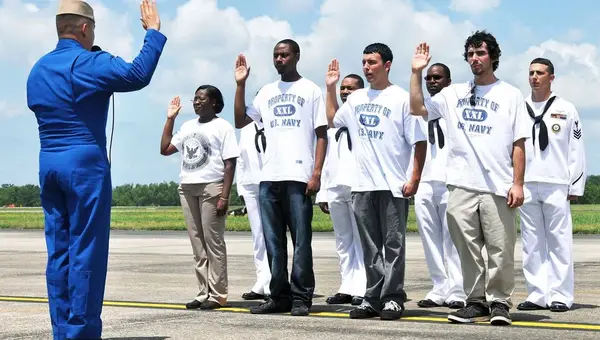
“I Do Solemnly Swear…”: The Constitutional Oath That Outlasts Every Administration
Military History

Where I Was, and What Followed: A Personal Reflection on 9/11 and Pearl Harbor
Lifestyle
Join the Conversation

BY ALLISON KIRSCHBAUM
Veteran, Military History & Culture Writer at VeteranLife
Navy Veteran
Allison Kirschbaum is a Navy Veteran and an experienced historian. She has seven years of experience creating compelling digital content across diverse industries, including Military, Defense, History, SaaS, MarTech, FinTech, financial services, insurance, and manufacturing. She brings this expertis...
Credentials
Expertise
Allison Kirschbaum is a Navy Veteran and an experienced historian. She has seven years of experience creating compelling digital content across diverse industries, including Military, Defense, History, SaaS, MarTech, FinTech, financial services, insurance, and manufacturing. She brings this expertis...