25 Funniest U.S. Military Aviator Callsigns Revealed

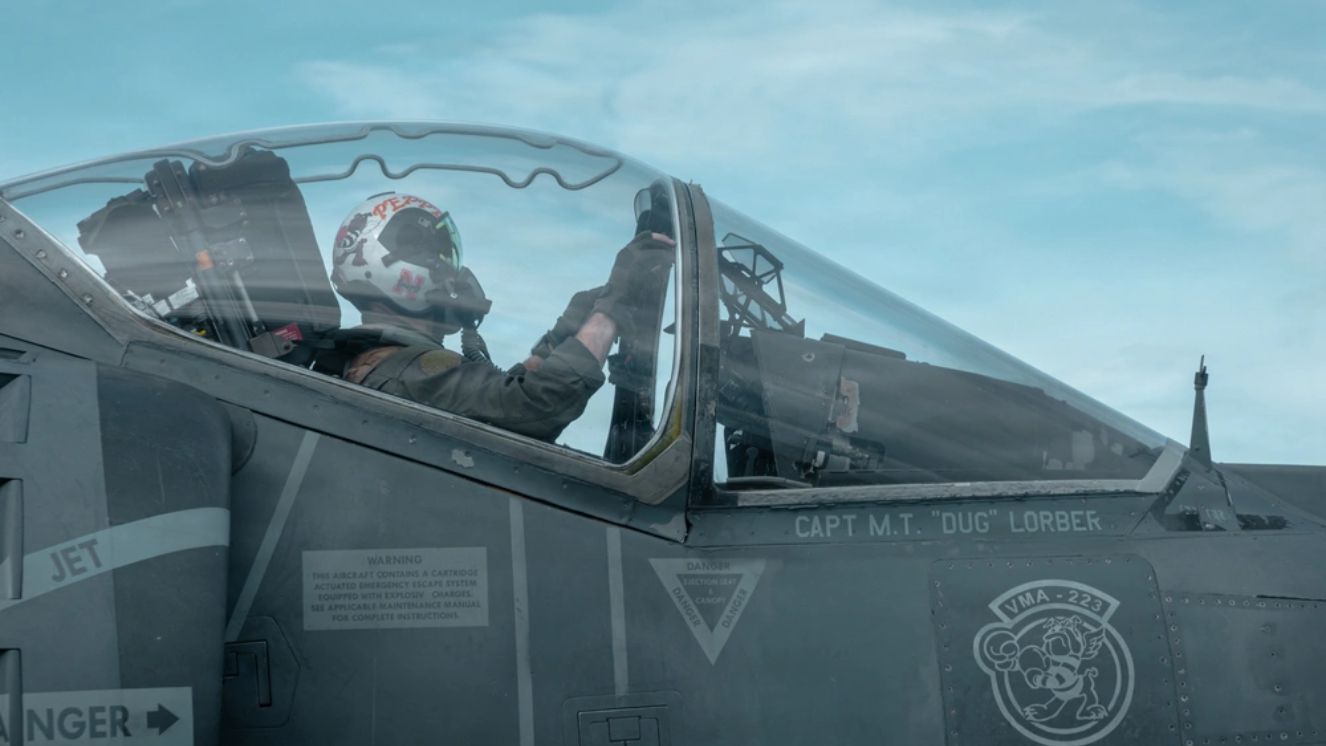
Callsigns are used as quick identifiers in combat and training, but they stick with you for life. A single mistake, a standout personality trait, or a moment of brilliance can earn you a nickname that follows you every time you get on the radio.
Though military callsigns have an unclear origin, it’s been a long-standing tradition since 1930. There are just three rules to these pilot nicknames. 1) Very few will be graced with cool military callsigns like “Maverick.” 2) If you don’t have a callsign already, you’ll get one very soon. 3) Complaining will only get your callsign swapped for one that’s far worse and much more embarrassing.
The real stories behind callsigns come from camaraderie and tradition, not Hollywood. Pilots don’t pick their own names—their squadron does. Some callsigns are compliments, some are jokes, and some can be a bit rough. That being said, let’s get into 25 funny, crazy, and cool military callsigns and their backstories.
Top 5 U.S. Military Aviator Callsigns and Codenames
1. Dead Walker
In early 1969, the 1st Battalion of the 9th Marine Regiment launched Operation Dewey Canyon. The cost of victory was steep, and very few of the 800 Marines involved in the mission survived.
The Marines turned what was originally an insulting term from the enemy into one of the greatest callsigns since World War 2.
It was used by the battalion during Operation Enduring Freedom (OEF) and Operation Iraqi Freedom (OIF) until its deactivation in 2014.
2. Steel Rain
The 3rd Battalion of the 27th Field Artillery Regiment had a multiple-launch rocket system that released rockets that would split into several tiny bombs.
The Iraqi soldiers would call the little bombs “steel rain,” and the name stuck.
3. Bloody Bucket
The 28th Infantry Division landed and reclaimed the beach in Normandy not long after D-Day. This victory gave them a formidable reputation.
The name came from Germans, who called the 28th Infantry Division “Bloody Bucket” after the red emblems on their uniforms.
4. Chaos
The former United States Secretary of Defense, General Mattis, is an idol to the Marine Corps. The retired general was a great leader full of charisma and wit.
As he said himself, he always had good ideas. At least, he thought he always had great ideas. His troops cheekily came up with CHAOS, which stands for “Colonel Has An Outstanding Solution,” and it stuck.
5. RawHide
This was the code name given to President Ronald Reagan. It was most fitting because of his love for ranching and his acting appearances in western films before his political career.
The name took on an additional meaning after the former president was met with an assassination attempt on March 30, 1981.
The Secret Service used the code name to report the president’s injuries over the radio. The president was able to recover two weeks later.
Popular and Controversial U.S. Military Aviator Callsigns
Not every callsign has a remarkable story behind it like the ones above. Callsigns can be random and unusual, tied to a personality, or even represent an embarrassing moment. Each one is unique. Here are 20 other creative callsigns for military pilots!
6. Snort
Dale “Snort” Snodgrass was the most famous F-14 Tomcat pilot in U.S. Navy history. His legendary low-level “banana pass” over USS America in 1988 became an iconic part of naval aviation.
His callsign, Snort, fit his booming voice and commanding presence.
7. Vader
The Navy’s Electronic Attack Squadron, VAQ-209, nicknamed the “Star Warriors,” uses the callsign “Vader”—a nod to Darth Vader and their electronic attack mission.
8. Diamond
The Strike Fighter Squadron, VFA-146 (“Blue Diamonds”), proudly uses “Diamond” as its radio callsign, linking its heritage to its lethal precision.
9. Felix
The VFA-31 “Tomcatters” fly with Felix the Cat as their mascot. Their callsign, Felix, is one of the most enduring in Navy history.
10. Giant Killer
This isn't a pilot but a control authority. Giant Killer is the Navy's air traffic control callsign for managing restricted training airspace off the East Coast.
Imagine the soundscape filled with the voices of controllers calmly guiding fighters through a maze of invisible routes, the tension rising with each directive.
"Giant Killer, you're cleared to switch lanes," crackles the radio, capturing the essence of this high-stakes choreography.
11. MOTO
"Master Of The Obvious" was pinned on a pilot who couldn’t resist narrating what everyone already knew.
One memorable radio exchange had him stating, "Altitude is crucial, guys, it's what keeps us in the air!" The squadron couldn't help but laugh. The irony made it stick.
12. Mobile
Air Force General James “Mike” Holmes carried the callsign Mobile, a clever play on his name and radio brevity.
13. Fatal
Navy Commander Al Krause started as “Fat Al.” He reclaimed it, and his callsign evolved into the much cooler Fatal.
14. Toro
Aggressive on the stick, one aviator earned the callsign "Toro," Spanish for "bull," a nod to his flying style.
15. Elvis
One Navy pilot’s resemblance and charisma sealed his fate as Elvis. He leaned into it, making it one of the most memorable callsigns of his era.
16. Yoda
Known for calm leadership and a knack for teaching, one pilot was dubbed Yoda—a rare callsign that carried deep respect.
17. UTA (U Talk A Lot)
A talkative aviator from an F-16 unit earned UTA when the squadron tired of his constant chatter on the radio.
18. Bam-Bam
A lieutenant who couldn’t resist buzzing the pattern too low was saddled with Bam-Bam, straight out of The Flintstones.
19. CYNDI
Short for “Check You’re Not Dumping, Idiot,” this unforgettable Navy callsign came from a fuel-dumping mishap on approach.
20. Curse
Lt. Platt from the 68th Fighter Squadron became Curse, a pun on his name that reminded everyone of bad luck and persistence.
21. Custer
Lt. Rob Fluck, a Navy Electronic Countermeasures Officer, carried the callsign Custer—a reference to his last name and military history’s most famous last stand.
22. Notso
An F-15 pilot named Sharp was ironically christened Notso Sharp. It was blunt, funny, and unforgettable.
23. NUF
Short for “Not Fun,” or “Opposite of Fun,” this name was given to a pilot who acted more like a grumpy old man than a fighter jock.
24. Shrek
One aviator’s resemblance to the animated ogre guaranteed his callsign: Shrek. Like many appearance-based nicknames, it stuck.
25. Prof
Known for his encyclopedic knowledge, a Navy pilot called “The Professor” eventually shortened it to Prof, a name that carried authority.
History and Legacy of U.S. Military Aviator Callsigns
The coolest callsigns in U.S. military history endure because they’re more than radio identifiers. They’re oral history, storytelling, and sometimes gentle humiliation rolled into two syllables.
These names remind us that while combat is a serious business, the people behind the controls are human, and humor is part of the survival process. That’s why these 25 callsigns live on. They were earned, not chosen.
A callsign is proof that your squadron saw you, remembered you, and decided who you’d be every time your voice hit the radio.
Read next:
Continue Reading

Check Out the Funniest Call Signs That Will Make You LOL
Lifestyle

Top 18 Funny Military Jokes To Share With All Your Military Friends
Lifestyle
Famous Military Call Signs That Echo in History
Military History
Join the Conversation

BY NATALIE OLIVERIO
Veteran & Senior Contributor, Military News at VeteranLife
Navy Veteran
Natalie Oliverio is a Navy Veteran, journalist, and entrepreneur whose reporting brings clarity, compassion, and credibility to stories that matter most to military families. With more than 100 published articles, she has become a trusted voice on defense policy, family life, and issues shaping the...
Credentials
Expertise
Natalie Oliverio is a Navy Veteran, journalist, and entrepreneur whose reporting brings clarity, compassion, and credibility to stories that matter most to military families. With more than 100 published articles, she has become a trusted voice on defense policy, family life, and issues shaping the...