INSIDE THE $10.8M PACT ACT BONUS SCANDAL THAT SHORTCHANGED CARE
COMMENT
SHARE

The Veterans PACT Act was designed to rebuild trust, expand care, speed up claims, and finally deliver justice to Veterans exposed to burn pits and toxic hazards. But a loophole in the law let senior VA executives at headquarters receive $10.8 million in bonuses that were meant for hard-to-fill jobs supporting PACT Act operations.
This wasn’t a simple accounting error. It was a betrayal of trust at the very moment VA had to prove the PACT Act could deliver for Veterans in crisis.
Understanding What the PACT Act Is for Veterans
The Sergeant First Class Heath Robinson Honoring Our Promise to Address Comprehensive Toxics Act of 2022, known as the Veterans PACT Act, dramatically expanded health care and disability benefits for Veterans exposed to toxic substances across multiple eras of service.
To support this surge in new claims and care demands, Congress created a workforce tool called Critical Skill Incentives, or CSIs. These were designed to recruit and retain employees in occupations experiencing severe shortages: human resources, information technology, police, food services, housekeeping, and other roles directly tied to delivering PACT Act benefits.
Simply put, PACT Act incentives were meant to support front-line workers, not benefit senior leaders.
How $10.8 Million in Veterans PACT Act Funds Went to Executives
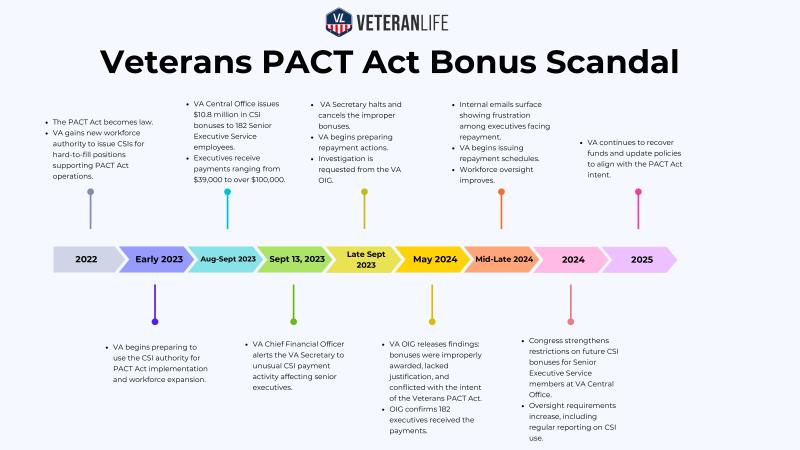
The VA Inspector General found that in August and September 2023, VA officials improperly awarded about $10.8 million in CSI bonuses to 182 Senior Executive Service employees at the VA Central Office. These included 148 Veterans Health Administration (VHA) executives and 34 Veterans Benefits Administration (VBA) executives.
Each bonus represented 25 percent of the executive’s base pay, with many ranging between $39,000 and more than $100,000. These were the maximum allowable amounts.
The Inspector General determined that:
- The bonuses lacked proper justification.
- Senior executives were not the intended recipients of Veterans' PACT Act incentives.
- VA policy and internal review processes failed to prevent the misuse.
- The awards did not align with the hiring and retention needs caused by the PACT Act for Veterans.
VA Secretary Denis McDonough learned of the scope of the payments after several weeks. Once informed, McDonough cancelled the bonuses and started a full investigation.
How the Breakdown Happened
Inspector General findings show that the approval chain was fractured. The Under Secretary for Health, Dr. Shereef Elnahal, who oversees VHA operations, approved 148 central-office VHA bonuses but did not clearly elevate concerns about their appropriateness.
The Under Secretary for Benefits, Joshua Jacobs, whose role includes overseeing VBA benefit delivery and policy, approved 34 VBA bonuses and provided some advance documentation, but the required individualized assessments were incomplete.
Internal HR experts attempted to raise concerns before the bonuses were issued, but those warnings never reached the Secretary in time. The VA’s Chief Financial Officer later alerted the Secretary after noticing unusual payment activity. By that time, the bonuses had already been paid out, and in many cases, the money was already spent.
The Impact on Veterans and Why This Matters
The Veterans PACT Act was a historic effort for those suffering from toxic exposure. Improper bonuses directly undermined this mission and public trust.
When funds meant for hard-to-fill roles go to executives:
- Front-line staffing stays strained and delays claims.
- Intended workforce support is diverted from veterans.
- Public trust in the PACT Act falls.
- Morale suffers, especially for ineligible staff.
For Veterans waiting on claims or care, staffing gaps cause real harm: delays, longer wait times, and reduced access to essential services.
Why These Bonuses Were Improper: The Root Cause
A structural problem caused this scandal. After Congress passed the PACT Act in 2022, the VA created Critical Skill Incentives as a new tool. The VA had never issued CSIs to such a large group before, and no system existed to verify if recipients held shortage positions.
Several internal safeguards failed at once:
- Policies were outdated.
- Reviews were rushed.
- Legal and HR opinions were inconsistent.
- Senior leaders interpreted the CSI authority more broadly than intended.
- No cross-check existed to flag that senior executives were not the target population for incentives.
- Because rules changed and oversight weakened, leadership allowed this major mistake.
What the VA Has Done Since
Once the issue became clear, the VA took multiple steps:
- Cancelled the improper bonuses.
- Initiated recoupment for all 182 senior executives who received CSIs.
- Developed repayment plans to avoid financial hardship while recovering taxpayer dollars.
- Implemented new safeguards to ensure CSI awards meet PACT Act requirements.
- Assigned new officials to oversee CSI approvals going forward.
Congress also responded by restricting the VA’s ability to issue recruitment or retention incentives to Senior Executive Service members in the central office.
Lawmakers now require the VA to report future CSI authority uses more frequently.
What Veterans Should Watch Now
Veterans, caregivers, and advocates can monitor several key areas to ensure the PACT Act stays on track:
Front-Line Hiring Improvements
Are claims processors, toxic-exposure clinicians, and support staff being hired and retained? This is the foundation of the PACT Act’s success.
Recoupment Progress
The VA is working to recover the full $10.8 million. Veterans should pay attention to how much is actually reclaimed.
Transparency on Future Incentives
CSIs should support roles directly tied to PACT Act implementation. Veterans should expect clear reporting and justification for every incentive.
Claims Processing Times and Clinic Capacity
If the PACT Act is working as intended, Veterans should see faster service and expanded toxic-exposure care.
Ongoing Oversight
More reports are coming from the Inspector General and from congressional committees. These will shape how incentives are used over the next several years.
What Veterans Can Do Right Now
- If you haven’t received a toxic exposure screening, schedule one through your VA medical center.
- Check your PACT Act claim status regularly in VA.gov or by contacting your VSOs.
- Report unusual delays or concerns to your local VA patient advocate.
- Stay updated on staffing announcements and new clinic openings in your region.
The PACT Act remains a major expansion of benefits for toxic-exposed Veterans.
The $10.8 million bonus scandal doesn’t erase the PACT Act’s promise, but it shows just how quickly reform can be hijacked without relentless oversight. The VA has responded, Congress has acted, and now it’s imperative these safeguards hold.
Now the priority is non-negotiable: ensure every PACT Act dollar rebuilds the workforce, accelerates claims, improves access, and honors our debt to toxic-exposed Veterans. No more diversion. No more excuses.
Suggested reads:
Join the Conversation

BY NATALIE OLIVERIO
Veteran & Senior Contributor, Military News at VeteranLife
Navy Veteran
Natalie Oliverio is a Navy Veteran, journalist, and entrepreneur whose reporting brings clarity, compassion, and credibility to stories that matter most to military families. With more than 100 published articles, she has become a trusted voice on defense policy, family life, and issues shaping the...
Credentials
Expertise
Natalie Oliverio is a Navy Veteran, journalist, and entrepreneur whose reporting brings clarity, compassion, and credibility to stories that matter most to military families. With more than 100 published articles, she has become a trusted voice on defense policy, family life, and issues shaping the...