VA Urges Veterans Denied Over 1973 Records Fire to File Again, as Agency Streamlines Claims Process

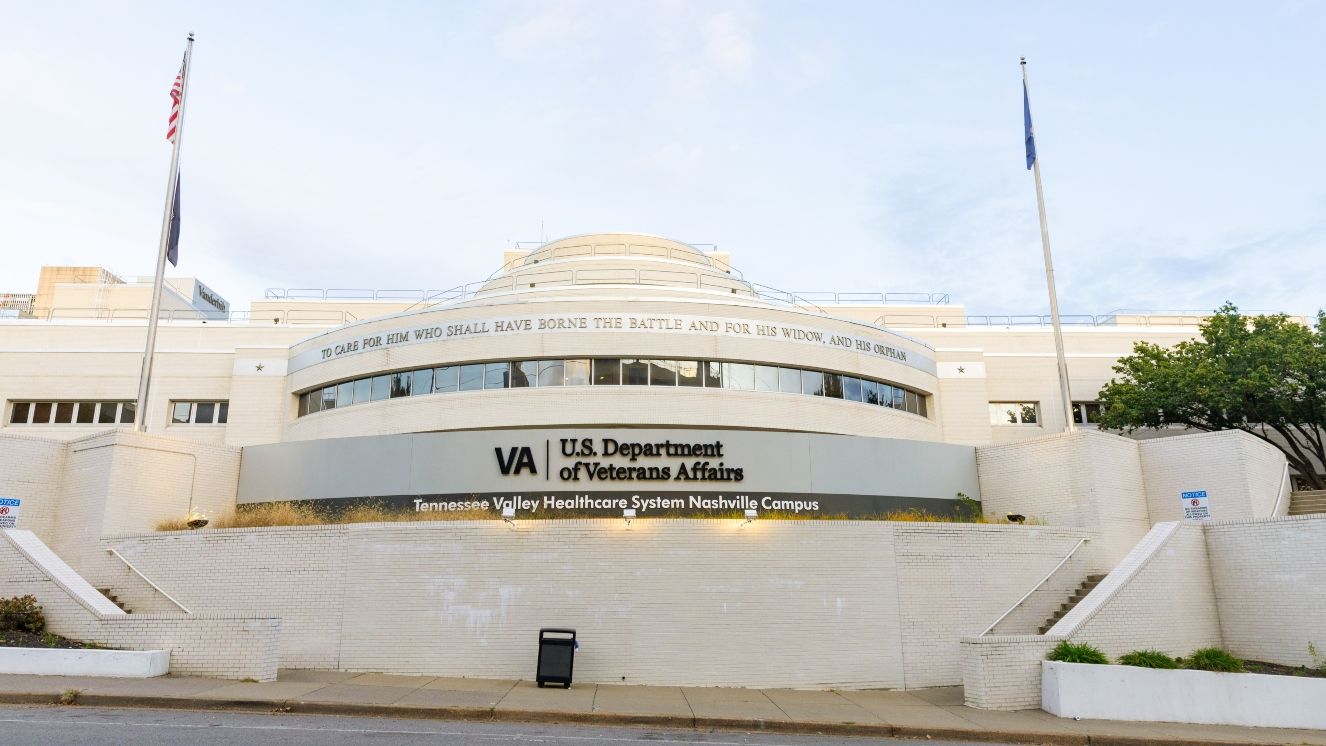
The Department of Veterans Affairs is telling Veterans who were previously denied disability benefits because their military records were destroyed in a 1973 fire that they should file again. The agency announced on August 24th of this year that it began using a revised, less burdensome claims process last month for Veterans affected by the blaze, more than 50 years after it consumed millions of Official Military Personnel Files at the National Personnel Records Center (NPRC) in St. Louis.
In a recent video accompanying the announcement, VA Deputy Secretary Paul R. Lawrence, Ph.D., and Principal Deputy Under Secretary for Benefits Margarita Devlin discussed the new process. The official release details what changed, why it changed, and what affected Veterans should do now.
"Even though it's been over 50 years, the effects of that fire are still being felt today," the release states.
What Happened in 1973?
The fire broke out just after midnight on July 12, 1973, at the NPRC's military personnel records building in St. Louis.
According to the National Archives and Records Administration (NARA), firefighters from more than 40 fire districts responded, but the blaze burned out of control for 22 hours and was not declared fully extinguished until July 16. Investigators were never able to determine its cause, and the extensive damage to the building destroyed whatever evidence might have pointed to an origin.
The building held no fire suppression system and no duplicate copies, microfilm or otherwise, of the records stored inside. When the fire was over, NARA estimated that 16 to 18 million Official Military Personnel Files had been damaged or destroyed. Roughly 6.5 million were recovered in some form, many requiring drying and preservation treatment. NARA staff worked out of tents on the facility grounds sorting and rehousing what could be saved, using backhoes and human chains to move nearly 90,000 cubic feet of wet paper.
The losses were not evenly distributed. Army records for Veterans discharged between Nov. 1, 1912, and Jan. 1, 1960, suffered an estimated 80 percent loss rate. Air Force records for Veterans discharged between Sept. 25, 1947, and Jan. 1, 1964, with last names falling alphabetically after "Hubbard" were hit nearly as hard, with an estimated 75 percent loss rate. Navy, Marine Corps, and Coast Guard records were housed separately and were largely unaffected.
For decades, NARA and the VA have relied on secondary sources to reconstruct what the fire destroyed: unit records, morning reports, hospital admission cards and extracts from the Surgeon General's Office, along with communications with other federal agencies that may have retained duplicate information. Veterans seeking to reconstruct a record are asked to complete NA Form 13055, which requests granular unit-level detail that the VA and NARA can use to search for alternate documentation.

A History of Claim Denials
The 1973 fire remains an active barrier to benefits. Veterans whose files were lost have had to prove they served, and in many cases prove that a current medical condition is connected to that service, without the paperwork the VA has historically leaned on to establish both facts. For a disability claim, that gap can be the difference between an award and a denial.
The claims process itself created additional hurdles. Veterans affected by the fire were typically asked to complete two forms: NA Form 13055 for medical treatment history and NA Form 13075 for military service history. They were often asked to complete them more than once over the life of a single claim, because different claims processors did not have easy visibility into what had already been submitted or requested.
The VA has also long applied what it calls a "sympathetic evidentiary standard" to claims where records are confirmed or reasonably believed to have been lost in the fire. Under that standard, the department says it can accept credible statements from the Veteran, from fellow service members, or from others with knowledge of the events in question.
What Changed in July: A New Single-Packet Process
The VA says claims processors now provide Veterans a single, comprehensive packet containing both required forms at the outset of a claim, rather than requesting them piecemeal. Once a Veteran has submitted the requested information, the release says the packet is retained and used for all future claim development, and processors are instructed not to make duplicate requests for information already on file unless NPRC specifically requires something new.
The VA also says it has reorganized how fire-related records and forms are stored internally, making them easier for staff to locate and reducing the odds that a processor unaware of prior submissions asks a Veteran to start over.
The new rules do not restore the destroyed records or alter the evidentiary standard. Instead, they aim to eliminate the internal friction that required Veterans to repeatedly submit the same paperwork.
Veterans reconstructing a claim without an original file are not limited to the sympathetic-standard testimony described above. VA and NARA guidance also points Veterans toward a range of supplemental evidence that can support a claim in place of an official record: statements from military medical personnel who treated them, certified "buddy" statements or affidavits from fellow service members who witnessed an injury or illness, military accident or police reports, employment or insurance-exam records that reference a condition, service photographs and letters, prescription records, and medical documentation from civilian providers who treated the veteran during or after service. None of that material is new to this year's process change, but the VA's release frames gathering it as a realistic path forward rather than a burden Veterans should expect to carry alone.
Quinn Slaven, VA Press Secretary, explained that once submitted, “these claims follow the same process.”
Slaven emphasized that if a Veteran believes his or her records were affected by the 1973 fire, they should file another claim. Veterans can file or reopen a claim at va.gov. The department's message to those Veterans is direct: a past denial tied to missing fire-era records should not be treated as a permanent conclusion.
Veterans should not assume they remain ineligible or that they have to reconstruct decades-old records on their own. They can call 1-800-827-1000 for help or more information, or work with an accredited representative.

A Larger, Unresolved Legislative Question
The VA's July overhaul addresses just one specific group of Veterans. Congress has recently debated what to do about a broader issue: Veterans whose records are missing due to administrative errors during transfers and storage.
In 2024, then-Sen. Jon Tester, D-Mont., introduced the Fred Hamilton Veterans' Lost Records Act, S. 3452, with a companion bill, H.R. 8048, introduced in the House by Reps. Morgan McGarvey, D-Ky., Chuck Edwards, R-N.C., Joe Morelle, D-N.Y., and Claudia Tenney, R-N.Y. The bill was named for Fred Hamilton, a Vietnam-era Veteran and VFW state chief, and would have extended the kind of alternative-evidence standard VA already applies to 1973 fire cases to any veteran whose service or medical records were lost or rendered unusable by government error, regardless of cause.
"It's a complete and total failure that veterans whose medical records have been lost by the government aren't given a fair shot at receiving the benefits and care they have earned," Tester said in a press release announcing the bill.
Hamilton, for whom the bill was named, made a similar case in the same release:
"There are too many Veterans out there that have no records due to circumstances out of their control. To deny them benefits is unjust."
Rep. McGarvey framed the House companion in terms of the burden already placed on Veterans.
"Veterans have already put on the uniform and sacrificed for our country; they shouldn't have to go through endless hoops to prove their service," he said.
The bill drew formal support from the American Legion, Disabled American Veterans, the Veterans of Foreign Wars and the Wounded Warrior Project. DAV National Commander Nancy Espinoza argued the government bore a particular responsibility given the circumstances under which the records were originally collected:
"When service members turn their medical records over to the federal government, they do so with the assurance that it will keep their records safe and secure."
Despite that coalition of support, neither S. 3452 nor H.R. 8048 was enacted before the 118th Congress ended in January 2025, and no direct successor bill under the same name has been introduced in the current Congress. The practical effect is that the evidentiary flexibility the VA already extends to Veterans affected by the 1973 fire remains, for now, specific to that fire.
Why the Fire Still Matters, Five Decades On
While the fire is a historical event, it remains a daily operational hurdle. Veterans discharged from the Army before 1960, or from the Air Force between 1947 and 1964, are now in their 80s, 90s, or older, and estimates of population size are inherently imprecise. The VA has not published a current count of how many affected Veterans remain alive or how many hold open or previously denied claims tied to fire-related record loss. What is measurable is the loss itself: an estimated 16 to 18 million files destroyed in a single building in four and a half days, with no backup copy anywhere in the federal government.
NARA's National Personnel Records Center still processes between 4,000 and 5,000 records requests a day, according to the agency, a category that includes so-called B-files, which require preservation handling before any information can be extracted from them. That volume, more than half a century after the fire, is itself a marker of how long-tailed the damage has proven to be.
To bypass this bottleneck, the VA is urging affected Veterans who gave up after previous denials to try again.
"If a veteran believes their records were affected by the 1973 fire, they should file another claim," VA Press Secretary Quinn Slaven said. "Once submitted, these claims follow the same process."
Veterans can file or reopen a claim at va.gov, or call 1-800-827-1000 for assistance.
Continue Reading

VA Provides Veterans Relief From Backlogged Medical Bills
Veteran Benefits
VA’s Review of Over 1 Million Disability Claims Sparks Concern. What Veterans Need to Know
Veteran Benefits
VA Claim Times Are Down 42%. Many Veterans Are Still Waiting Months
Veteran Benefits
Join the Conversation

BY MICKEY ADDISON
Military Affairs Analyst at VeteranLife
Air Force Veteran
Mickey Addison is a retired U.S. Air Force colonel and former defense consultant with over 30 years of experience leading operational, engineering, and joint organizations. After military service, he advised senior Department of Defense leaders on strategy, readiness, and infrastructure. In additi...
Credentials
Expertise
Mickey Addison is a retired U.S. Air Force colonel and former defense consultant with over 30 years of experience leading operational, engineering, and joint organizations. After military service, he advised senior Department of Defense leaders on strategy, readiness, and infrastructure. In additi...