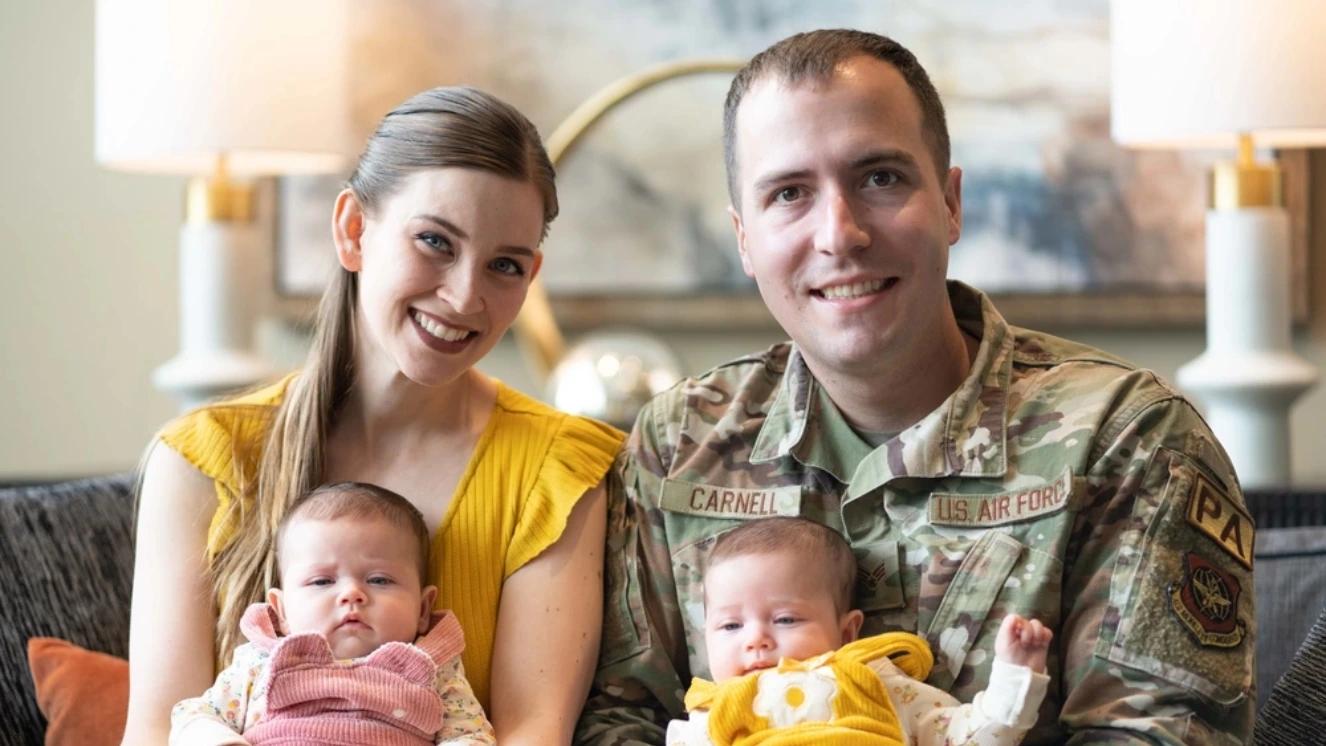
Military Spouse Appreciation Week Is Here: Your 2026 Guide to Benefits, Career Help, and Support

Military spouses get very good at living inside uncertainty. There is usually a deployment calendar taped somewhere inside the house, half-unpacked boxes sitting in a guest room because another move never feels very far away, and stacks of school paperwork spread across kitchen counters while families try to rebuild routines all over again. Some spouses spend weeks waiting for household goods while living out of temporary lodging with children, pets, and borrowed furniture. Others are calling another Child Development Center, getting on another waitlist after finding out the current one stretches months longer than expected.
By the time Military Spouse Appreciation Week arrives each May, most spouses aren’t thinking much about appreciation events. They’re trying to coordinate childcare around field exercises, update expired paperwork at exactly the wrong moment, enroll children in another new school district, and figure out whether this assignment will finally give the family enough stability to exhale for a while. Military life often asks families to function as though constant disruption is normal, and to them, it is.
Military Spouse Appreciation Day, observed this year on May 8, was established in 1984 by Ronald Reagan to recognize the role military spouses play in supporting service members and military readiness. For active duty, Guard, and Reserve families, that role extends far beyond emotional support.
Military spouses frequently become the continuity behind everything else, managing moves, school transitions, deployment cycles, reintegration, finances, medical appointments, and the endless administrative responsibilities military life quietly places onto families year after year. Some spouses become experts at navigating military systems before they turn 30, yet many still are not entirely sure what benefits or support they actually qualify for.

Career Disruption Keeps Following Military Families
The Military Spouse title is synonymous with resilience because military life demands it. What many people don’t realize is how financially disruptive that resilience becomes after enough years of starting over, job seeking, or being underemployed. A spouse finally builds professional momentum, then PCS orders arrive. A teaching license no longer transfers cleanly across state lines, despite the push for progress and policy change. A nurse waits months for credentialing approvals. Someone leaves a job they genuinely loved because military timelines leave little room for negotiation.
The consequences can trickle in at times, which is part of why they are easy to underestimate for a while. Retirement contributions stop during employment gaps. Professional networks disappear after every PCS. Career progression slows down in ways that can be difficult to explain on paper, but are unavoidable barriers to the people living through it. Military spouse unemployment and underemployment have remained persistent concerns for years, including among spouses with advanced degrees and significant professional experience.
Programs through Military OneSource and MySECO provide free career coaching, résumé support, interview preparation, and career guidance tailored specifically for military spouses. The My Career Advancement Account, known as MyCAA, offers up to $4,000 in tuition assistance for eligible spouses pursuing licenses, certifications, or associate degrees tied to portable career fields.
MyCAA is not universally available to every military spouse. Qualification is currently limited to spouses of service members in pay grades E-1 to E-6, W-1 to W-2, and O-1 to O-3, which is why families should verify eligibility directly through DoD resources instead of relying on word of mouth.
Federal employment pathways can sometimes offer more continuity than civilian sectors during repeated relocations. This varies by location and duty station, like all things military. Through Military Spouse Preference and certain noncompetitive hiring authorities, eligible spouses may receive additional consideration for some federal positions connected to relocation or military status.
Taxes Get Complicated Faster Than Families Expect
Military families usually discover very quickly that taxes and residency rules become confusing the moment multiple states enter the picture. The rules around state taxes have significantly improved recently, thanks to the Veterans Auto and Education Improvement Act, which amended the Servicemembers Civil Relief Act (SCRA).
As of 2023, military spouses can now elect to use the service member's state of legal residence for state and local taxes, even if the spouse has never physically lived in that state. Previously, under the Military Spouse Residency Relief Act (MSRRA), spouses had to establish residency in a state before claiming it, which created massive headaches during PCS moves.
That can affect how state income taxes are filed and whether families owe taxes across multiple states. While this new protection simplifies filing, military affiliation alone does not automatically exempt spouses from state tax obligations. States can also apply portions of the law differently depending on local tax rules.
A spouse trying to sort through all of this while waiting for household goods delivery, tracking down medical records after another move, and enrolling children in school can miss important details fairly easily.
Military OneSource and installation tax assistance programs can help families navigate residency and filing questions before mistakes become expensive.
Military Life Rarely Burns People Out All At Once
One deployment turns into another. A spouse manages the household alone for months, then shifts immediately into reintegration routines once everyone returns home. Children struggle through another transition period, friendships reset after every move; entire support systems disappear every few years, and have to be rebuilt from scratch through new neighborhoods, new schools, and new communities.
Military OneSource provides free non-medical counseling, financial consultations, peer support resources, and legal assistance for military families. Installation support centers also offer relocation assistance, family readiness programs, spouse networking resources, and transition support. Even so, many spouses wait until they are completely overwhelmed before reaching for help because everyone else’s needs tend to feel more urgent first.
There is also an unspoken culture around military spouses that quietly rewards overextension. The spouse who handles everything alone becomes the example people admire. The spouse who somehow manages deployments, childcare, school transitions, work, household logistics, and emotional support without visibly falling apart becomes proof that it can all be done. Sometimes military communities become so accustomed to praising resilience that nobody stops long enough to ask whether people are actually doing okay underneath all of it.

Appreciation Week Is Nice, But Stability Is What Families Need
Every Military Spouse Appreciation Week brings another round of local perks, social media campaigns, and corporate appreciation posts thanking military spouses for their sacrifice. Some of those perks genuinely help, especially for junior enlisted military families balancing relocation expenses, childcare costs, or periods of unemployment between duty stations.
There’s a big difference between feeling appreciated and feeling stable. A free coffee doesn’t solve a six-month licensing delay, keeping someone out of work. A restaurant discount doesn’t rebuild retirement savings lost during repeated employment interruptions. A polished social media graphic can’t fix the exhaustion that comes from rebuilding life every few years, while trying to convince yourself the instability is temporary this time.
Military spouses are the backbone of military families, but what often goes unsaid is how many are carrying enormous amounts of emotional and logistical weight with very little consistency underfoot to support them. Military Spouse Appreciation Week was created to recognize the contributions military spouses make behind the scenes. The most meaningful thing families can do with that recognition now may be slowing down long enough to ask harder questions about what support they qualify for, what protections they may be missing, and what systems could realistically make military life more sustainable over time.
Behind nearly every military family is someone who has quietly become very good at rebuilding life over and over again, while keeping it all together, sometimes for years, sometimes for decades. There is no amount of appreciation too big for a military spouse.
Continue Reading

Military Spouse Benefits Guide 2026: What You’re Owed, What You’re Missing, and How to Get It
Spouse Benefits
Military Spouse Appreciation Day: 5 Simple Ways to Support a Military Spouse
Relationship Advice

5 Ways to Celebrate Military Spouse Appreciation Day
Military Spouse & Family
Join the Conversation

BY NATALIE OLIVERIO
Veteran & Senior Contributor, Military News at VeteranLife
Navy Veteran
Natalie Oliverio is a Navy Veteran, journalist, and entrepreneur whose reporting brings clarity, compassion, and credibility to stories that matter most to military families. With more than 100 published articles, she has become a trusted voice on defense policy, family life, and issues shaping the...
Credentials
Expertise
Natalie Oliverio is a Navy Veteran, journalist, and entrepreneur whose reporting brings clarity, compassion, and credibility to stories that matter most to military families. With more than 100 published articles, she has become a trusted voice on defense policy, family life, and issues shaping the...