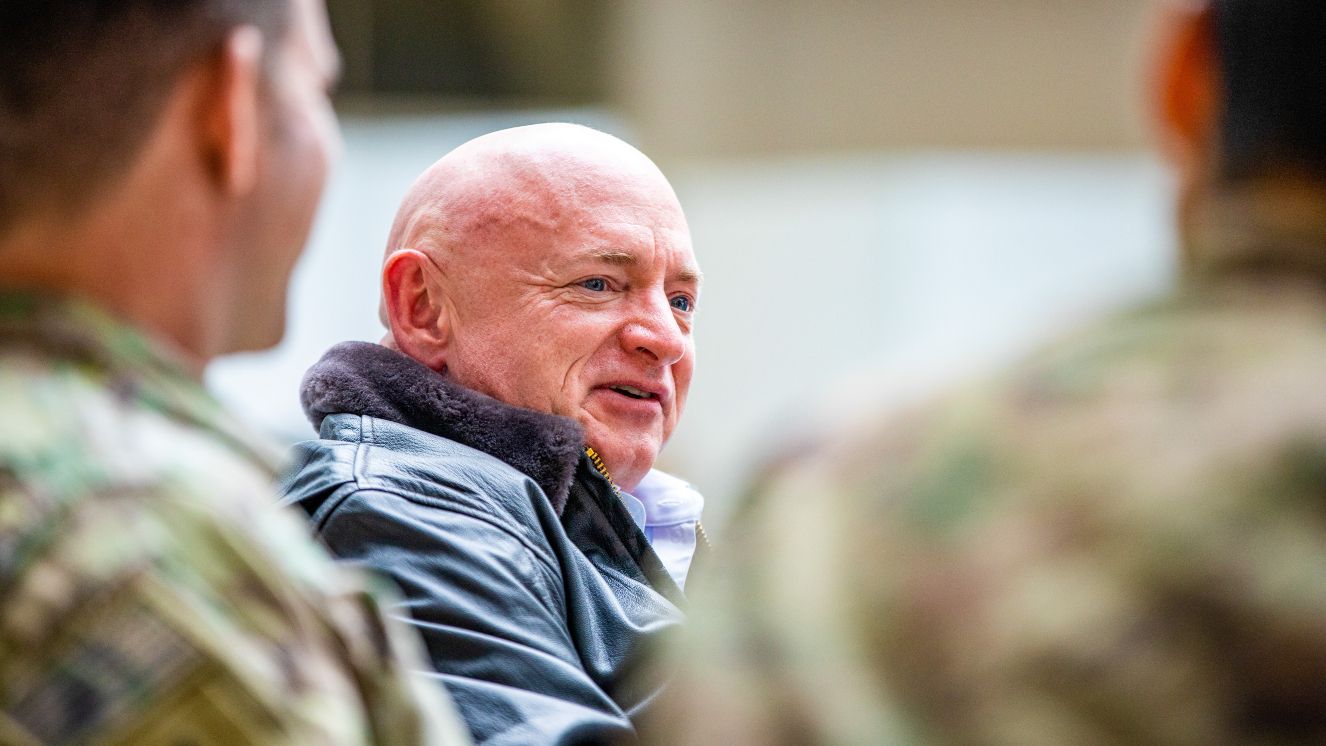
Mark Kelly's New Pentagon Review Is Raising a Bigger Question for Veterans

Veterans have always moved into public life after service, although the paths rarely look the same. Some end up in business. Others coach Little League, advocate, run organizations, or eventually step into elected office and public leadership. The roles change, but military service often stays attached to a person long after the uniform is gone.
That is part of why the latest Pentagon review involving retired Navy Capt. and Sen. Mark Kelly is drawing scrutiny from Veterans and military advocacy groups.
Defense Secretary Pete Hegseth recently requested a second Pentagon legal review involving comments Kelly made regarding U.S. weapons stockpiles and military briefings connected to the ongoing Iran conflict. Kelly has publicly disputed allegations that he improperly discussed classified information, stating that the information was already public knowledge.
For many Veterans, the question underneath this headline isn't really limited to one retired Navy captain who later became a U.S. senator. It raises a broader, more complex legal question about how military expectations—and the reach of military law—follow Veterans differently once they move into public life.

The Context: Colliding Timelines and Public Accountability
To understand why military communities are watching this so closely, it requires looking at the recent history between Kelly and the Pentagon.
This current review was sparked by comments Kelly made on Face the Nation, where he noted it would take years to replenish severely depleted munitions—specifically Tomahawks, ATACMS, and Patriots—expended during the Iran conflict.
When Hegseth initiated a legal review over alleged classified leaks, Kelly immediately pointed out that Hegseth himself had stated those exact vulnerabilities in a public, open-door Senate Armed Services Committee hearing just weeks prior, on April 30.
But this isn't their first clash, and that is why the stakes are legally significant for observers.
Just last fall, Kelly was the subject of a separate review centered around comments he and other Veteran lawmakers made regarding "unlawful orders." That dispute escalated to the point where Hegseth attempted to strip Kelly of his retired rank and recall him for court-martial—a move a federal judge ultimately had to block on First Amendment grounds.
The Weight of the Uniform in Public Office
Military service has produced public leaders for generations. Veterans have moved into elected office, media roles, executive leadership, and advocacy for decades. What changes is visibility.
Military experience will always be more than a line on a résumé. A Veteran who steps into public life carries a heavy biography. Service history, leadership experience, and military judgment become part of how people interpret their public decisions and disagreements.
Kelly occupies an unusually visible space as a sitting U.S. senator, a retired Navy captain, and a former astronaut. That combination creates a level of scrutiny many Veterans recognize immediately, even if the scale is different.
Military communities and legal advocates monitor these types of proceedings because policies, expectations, and UCMJ interpretations that begin with a high-profile case can establish precedents that impact the broader force as time moves on.

The Conversation Veterans Are Having
Military communities pay attention to precedent. Beneath the political headlines, the situation highlights several core policy questions regarding the post-service environment:
- Does military experience create different expectations once someone enters public life?
- Does a public disagreement carry different weight when military service is part of the story?
- At what point does military service transition into personal history, and at what point does it remain an active part of public identity?
- Where does the jurisdiction of the Uniform Code of Military Justice (UCMJ) truly end for retirees?
Those questions don't come with clean answers. Most former service members aren't military retirees, and military retirees occupy a unique category under federal law that keeps them tethered to the Department of Defense.
Why This Feels Personal for Military Retirees
Retirement pay helps cover mortgages, tuition bills, prescriptions, and everyday expenses. Questions involving status, authority, or the threat of a recalled rank rarely stay confined to the service member because families carry that uncertainty, too.
Accountability isn't a foreign concept in military communities. Established DoD policy dictates that retirement doesn't place anyone above the law or established rules. But accountability and expectation aren't always the same conversation.
Right now, Kelly's current review remains exactly what it is: a review. No announced findings have been issued, and no publicly confirmed disciplinary action has followed.
Veterans know stories evolve as new details surface. But the interest in this story isn't just about Mark Kelly—it’s about the realization that retirement may close one chapter, but military identity doesn't disappear all at once.
For career service members, military service is more than a past profession; it is an enduring legal and professional status. The question now being tested is how far the military's rules extend into civilian public life.
Continue Reading

Can Retired Service Members Be Punished Under the UCMJ? What Mark Kelly's Case Reveals
Military Retirement

Can the DoD Strip Your Rank After You Retire? Why the Mark Kelly Case Matters to Every Veteran
Information

Did Mark Kelly Serve in the Military?
Military History
Join the Conversation

BY NATALIE OLIVERIO
Veteran & Senior Contributor, Military News at VeteranLife
Navy Veteran
Natalie Oliverio is a Navy Veteran, journalist, and entrepreneur whose reporting brings clarity, compassion, and credibility to stories that matter most to military families. With more than 100 published articles, she has become a trusted voice on defense policy, family life, and issues shaping the...
Credentials
Expertise
Natalie Oliverio is a Navy Veteran, journalist, and entrepreneur whose reporting brings clarity, compassion, and credibility to stories that matter most to military families. With more than 100 published articles, she has become a trusted voice on defense policy, family life, and issues shaping the...