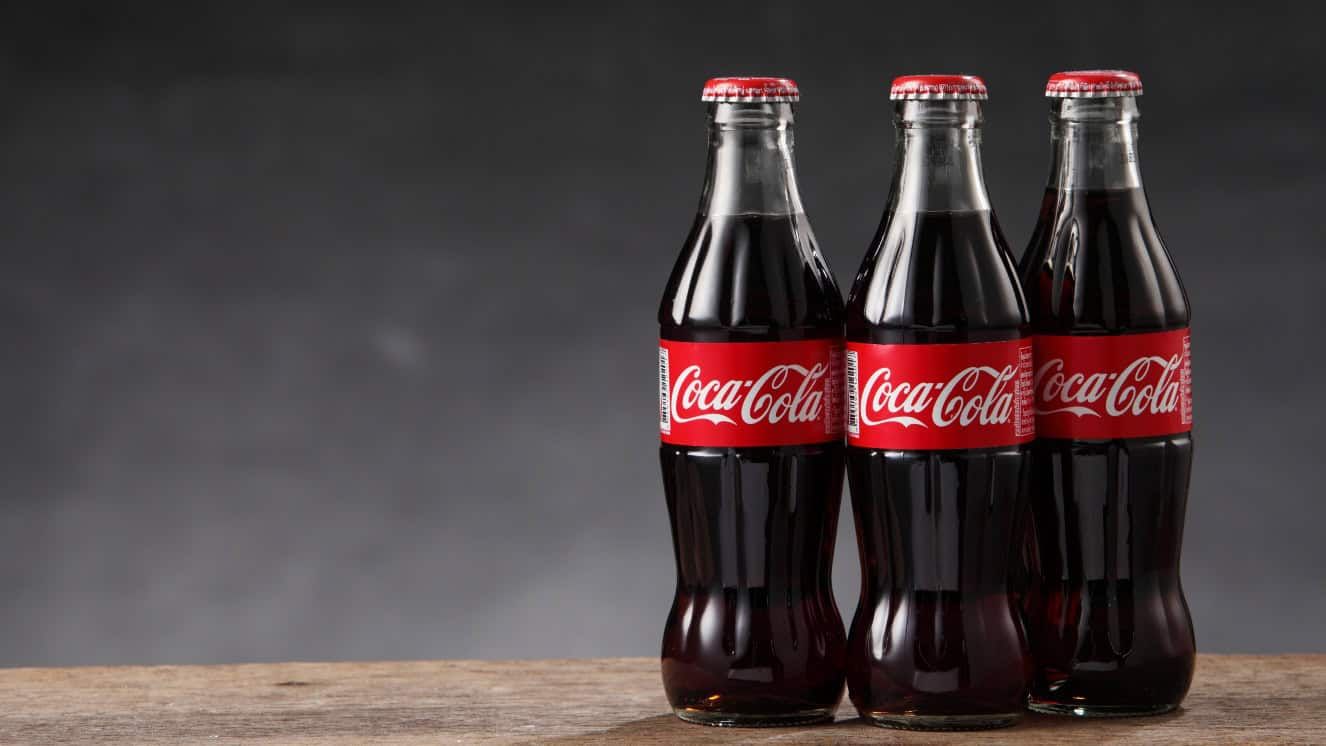
How Coca-Cola Became a Taste of Home on the Front Lines During WWII

One of the most iconic American brands was actually invented by someone who served in the military. Long before Coca-Cola became a symbol of American freedom and morale overseas, its creator was a Confederate soldier fighting against a unified United States.
Like most historical figures, the man behind the famous beverage was multifaceted. John Stith Pemberton created Coca-Cola while attempting to cure a severe drug addiction tied to a battlefield wound. It is a striking irony of history: a drink invented to soothe the agonizing wounds of America's deadliest domestic conflict would eventually become the ultimate crowd favorite among American soldiers fighting a global world war.

When Was Coca-Cola Invented?
Coca-Cola was officially invented on May 8, 1886, when Dr. John Pemberton began selling his drink at Jacobs’ Pharmacy in Atlanta, Georgia. In its first year, Pemberton—a pharmacist by trade—would sell an average of just nine beverages each day.
But this internationally known, iconic brand of Americana was created out of desperate personal necessity, intended for a far more serious purpose than simple enjoyment.
Dr. Pemberton was addicted to morphine. He had begun using the powerful opiate to cope with the pain of a severe chest wound caused by a cavalry saber during the Civil War. His injury occurred at the Battle of Columbus in April 1865.
Even though Confederate General Robert E. Lee had already surrendered at Appomattox Court House on April 9, communication in the 19th century was incredibly slow. Word of the war's end took weeks to reach the deep South, leading to unnecessary skirmishes like the one where Pemberton, then a Confederate Lieutenant Colonel, was slashed across the chest.
He survived the battle, but the lingering pain of the injury left him with a lifelong, debilitating morphine addiction.
How Did John Stith Pemberton Invent Coca-Cola?
By 1886, Dr. Pemberton was desperately looking for a cure for his addiction. He was simultaneously seeking a workaround for Atlanta’s newly enacted temperance laws, which heavily restricted alcohol.
Initially, Pemberton had formulated a popular alcoholic beverage called "Pemberton’s French Wine Coca." Inspired by a similar Parisian drink called Vin Mariani, Pemberton's concoction blended wine with coca extract. It was marketed as a nerve tonic designed to help people relax, cure headaches, and treat a variety of ailments, including morphine dependency.
When Fulton County banned alcohol, Pemberton was forced to pivot. He removed the wine, replacing it with a sugar syrup, and kept the two core active ingredients: the coca leaf (which contained trace amounts of cocaine) and the kola nut (which provided a heavy dose of caffeine).
Pemberton began selling the sweet syrup alone. When mixed with carbonated soda water at the local pharmacy fountain, it proved to be a delicious, refreshing treat. For only five cents, patrons could enjoy this new "brain tonic," completely alcohol-free.
The story of Coca-Cola's early days, however, would be incomplete without mentioning its marketing. Dr. Pemberton's partner and bookkeeper, Frank M. Robinson, came up with the name, suggesting that the "two Cs would look well in advertising." Robinson even penned the famous script logo still used by the company today, turning a pharmacist's syrup into a highly marketable brand.
From Pharmacy Experiment to Global Empire
Pemberton's success was short-lived. His health failing and his morphine addiction draining his finances, he began selling off the rights to his formula. He died in 1888, just two years after creating the drink, never living to see it become a global phenomenon.
The rights were ultimately consolidated by businessman Asa Griggs Candler, who aggressively marketed the beverage across the country. By the time corporate leader Robert Woodruff took over as president of the company in 1923, Coca-Cola was an American staple.
Woodruff had his sights set on international expansion, and the outbreak of World War II would provide an unprecedented, albeit unexpected, opportunity to introduce the drink to the world.

A Soldier’s Best Friend In World War II
As American troops deployed to theaters across the globe, Coca-Cola followed. In 1941, Coca-Cola President Robert Woodruff made a bold promise:
"Every man in uniform gets a bottle of Coca-Cola for five cents, wherever he is and whatever it costs the company."
It was a brilliant morale-boosting initiative, but shipping millions of heavy, fragile glass bottles across active war zones and submarine-infested oceans was entirely impractical.
The solution came from the highest ranks of the military. On June 29, 1943, General Dwight D. Eisenhower, the Supreme Allied Commander of the Allied Expeditionary Forces in North Africa, sent an urgent cablegram requesting the equipment and materials for 10 portable bottling plants.
Rather than just shipping the bottles, Coca-Cola partnered with the military to build the infrastructure overseas. Those initial portable factories were a massive success, producing 6 million bottles of Coke each month and providing a crisp, familiar taste of home to American soldiers in the trenches.
The Coca-Cola Colonels
The overseas operation grew so large that Coca-Cola ultimately established 64 bottling plants abroad during the war. To manage them, the company sent 148 civilian representatives to the front lines.
These representatives were officially classified by the military as "Technical Observers" (TOs). Their sole mission was to ensure that American soldiers had access to Coca-Cola, regardless of their location. The troops, deeply appreciative of the morale boost, affectionately dubbed these men the "Coca-Cola Colonels."
The logistical achievement was staggering. According to Justine Fletcher, an archivist for the Coca-Cola Company,
"More than five billion bottles of Coke were consumed by military service personnel during the war, in addition to countless servings through dispensers and mobile, self-contained units in battle areas."
A Taste of Home on the Front Lines
Who would have thought that a simple carbonated beverage would hold such deep meaning for the United States Armed Forces?
Of all the things to become part of military history, a soft drink probably wasn't on anyone's radar. Yet somehow, Coca-Cola earned its place. It is a profound legacy for a drink born from the pain and division of the American Civil War—eventually evolving into the ultimate symbol of American unity, comfort, and home for soldiers fighting half a world away.
Join the Conversation

BY ALLISON KIRSCHBAUM
Veteran, Military History & Culture Writer at VeteranLife
Navy Veteran
Allison Kirschbaum is a Navy Veteran and an experienced historian. She has seven years of experience creating compelling digital content across diverse industries, including Military, Defense, History, SaaS, MarTech, FinTech, financial services, insurance, and manufacturing. She brings this expertis...
Credentials
Expertise
Allison Kirschbaum is a Navy Veteran and an experienced historian. She has seven years of experience creating compelling digital content across diverse industries, including Military, Defense, History, SaaS, MarTech, FinTech, financial services, insurance, and manufacturing. She brings this expertis...