Operation Babylift: The Race to Save Children Before Saigon Fell

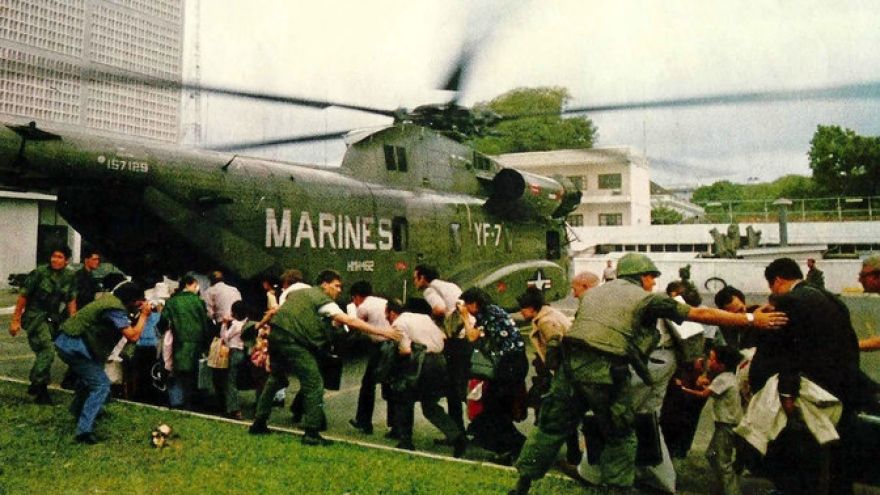
The Vietnam War was coming to its end in April 1975, and Saigon (present-day Ho Chi Minh City) was on the verge of collapsing. Evacuations for American service members and allied forces were already on their way. However, thousands of children remained in orphanages across South Vietnam, and they were too vulnerable to be left behind.
With this situation, the United States conducted an operation that could help evacuate the children out of the country before the fall of Saigon. Within a few weeks, more than 3,000 children were evacuated to the United States and other countries for adoption.
This is Operation Babylift, one of the most ambitious and desperate missions of the Vietnam War, which gave thousands of children a second chance at life.
The Fall of Saigon and the 1975 Refugee Crisis
During the early months of 1975, South Vietnam was losing quickly as the North Vietnamese continued to take control of cities like Da Nang, Quang Tri, and An Loc. Because of this, civilians began to flee southward, specifically to Saigon.
The South Vietnamese government struggled to manage both the military situation and the refugee crisis. Panic was spreading everywhere, and the U.S. was already preparing for the full evacuation of the American service members and some South Vietnamese allies, an effort that would ultimately culminate in Operation Frequent Wind.
Despite the evacuation efforts, attention turned to children living in orphanages across South Vietnam. Many of these children had been affected by the war for many years. Some had lost their parents, while others had been placed in orphanages because their families could no longer take care of them.

What Happened in Operation Babylift?
Adoption agencies were already operating in Vietnam, including Holt International. They were the main driver of the change in many lives today. They were trying to find a way to save the orphans as the situation in Saigon was no longer safe.
Fortunately, United States President Gerald Ford announced on April 3, 1975, that the U.S. would be flying Vietnamese orphans out of the country for adoption.
Operation Babylift began the next day, April 4, 1975. The 1st flight was a U.S. Air Force C-5A Galaxy, one of the largest aircraft in the world. It carried children, caregivers, and flight crew departing from Tan Son Nhut Air Base in Saigon.
However, the aircraft experienced a serious mechanical failure after takeoff. The rear cargo door blew open, which damaged the aircraft’s control systems. The flight crew tried to return to the airbase, but sadly, the plane crashed in a field outside the city. This devastating crash killed 138 people, including 78 children, as well as U.S. Air Force crew members and civilian volunteers.
The mission continued for the other children left, even after the crash. Over the next 3 weeks, children were flown out of South Vietnam to countries including the U.S., Canada, Australia, and France. Just before the fall of Saigon on April 30, Operation Babylift had successfully evacuated more than 3,000 children.

Operation Babylift Adoptees Share Their Stories
The children who were rescued came from different situations, and their stories differed as well. Many were orphans who had mainly lost both parents in the war. Others had been placed in orphanages because of poverty.
As these children grew up in adoptive homes abroad, many of them longed to understand their origins. Some have also shared their stories publicly.
Jon Michael Dull (Tran Ai Quoc)
Jon was one of the children evacuated during Operation Babylift. He was adopted by an American family and raised in the United States. He was originally named Tran Ai Quoc and later given the name Jon Michael Dull by his American parents.
Jon and his wife, Charlotte, traveled to many places, such as Vietnam. He later visited an orphanage in North Da Nang.
In an interview with Holt International, Jon recalled, “I’m not really sure why I decided we should go visit an orphanage... But I felt it was important for me to visit one on my 50th birthday trip to help remind me [of where I once lived] and ground me.”
Jodi Willis (Cao Thi Nga)
Jodi Willis, originally named Cao Thi Nga, was also a part of Operation Babylift. She was adopted by a family in the U.S. and was raised there as well. Jodi later realized she wanted to search for her biological family.
She shared her journey with Holt International, stating:
“Obtaining my adoption records in 2021, approaching my 50th birthday, and meeting John Williams, who answered so many of my questions and eased so many of my uncertainties, has lit a desire in me to find out more about myself.”
A New Life for Thousands of Children
Operation Babylift gave thousands of children a second chance at life. Many of them grew up in different countries and cultures, far from where their lives began.
However, one thing remains certain for them: Operation Babylift changed the course of thousands of lives in a matter of weeks. In the end, this story tells us that history isn’t just about the battles but also about the lives lived in them and the stories from these children that continued long after the war ended.
Read next:
Join the Conversation

BY ALLISON KIRSCHBAUM
Veteran, Military History & Culture Writer at VeteranLife
Navy Veteran
Allison Kirschbaum is a Navy Veteran and an experienced historian. She has seven years of experience creating compelling digital content across diverse industries, including Military, Defense, History, SaaS, MarTech, FinTech, financial services, insurance, and manufacturing. She brings this expertis...
Credentials
Expertise
Allison Kirschbaum is a Navy Veteran and an experienced historian. She has seven years of experience creating compelling digital content across diverse industries, including Military, Defense, History, SaaS, MarTech, FinTech, financial services, insurance, and manufacturing. She brings this expertis...