“I Knew I Had to Serve”: How 9/11 Shaped a Generation of American Veterans

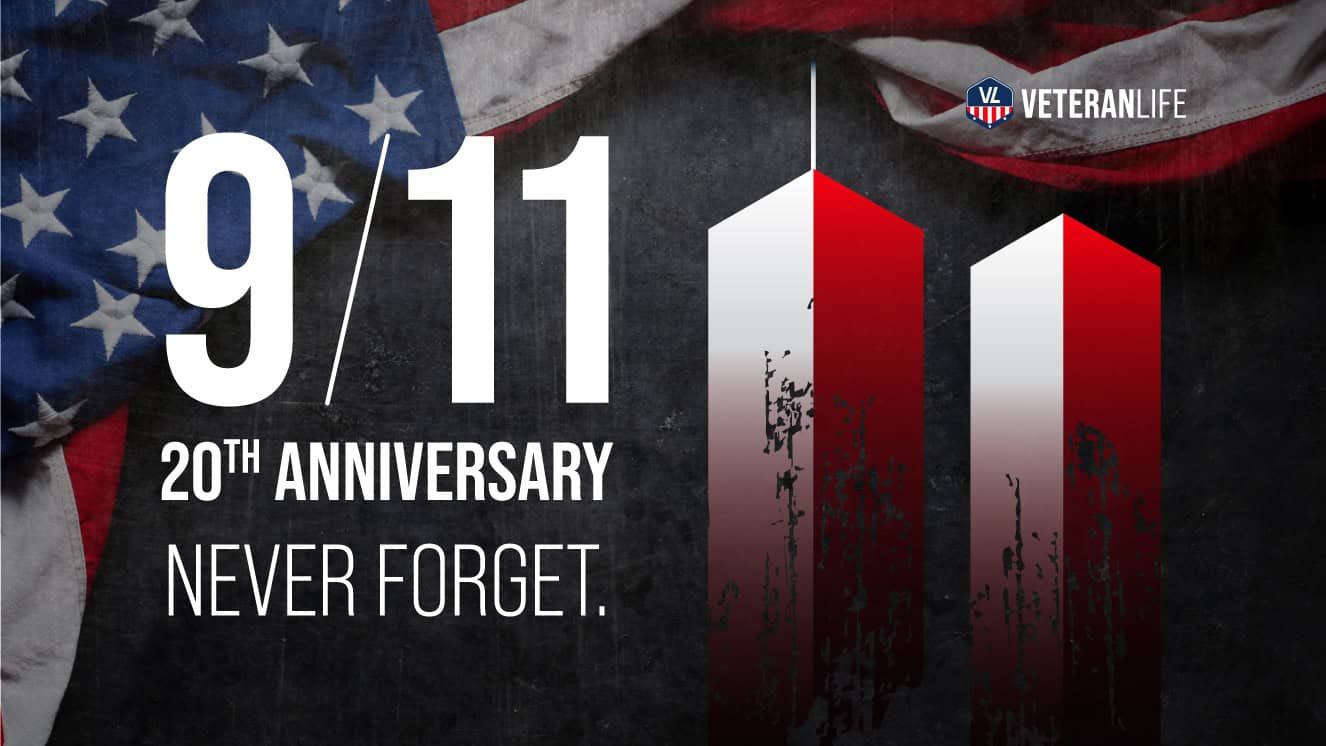
September 11, 2001, changed the lives of millions of Americans. For some, the attacks also changed what they wanted to do with their own lives.
In the weeks and months after 9/11, Americans across the country decided to join the military. Some had already wanted a military career, and many of those who joined went on to serve in Iraq, Afghanistan, and other parts of the world.
They served for a few years, and others stayed in the military for much longer. Their reasons for joining and their experiences in uniform were different.
Now, 25 years after 9/11, many of those service members are Veterans. This is a look at how many people joined after the attacks, what their service was like, and how the benefits available to them have changed over the years.
What Happened on September 11, 2001?
On September 11, 2001, 19 members of al-Qaeda hijacked four commercial airplanes.
The attacks targeted the World Trade Center and the Pentagon, while a fourth hijacked plane crashed near Shanksville, Pennsylvania, after passengers and crew tried to regain control. Nearly 3,000 people were killed that day.
Aside from that, the attacks led to a major change in U.S. military policy and operations. On September 14, Congress passed the Authorization for Use of Military Force Against Terrorists. The law authorized the president to use military force against those responsible for the 9/11 attacks.
How 9/11 Changed America and the Military
After 9/11, the U.S. military entered a period of sustained overseas operations that would shape service for the next two decades.
Some service members were already in uniform when the attacks happened. Others joined in the years that followed. The attacks also changed how the U.S. military was used and led to a long period of military operations overseas.
The first U.S. military operations in Afghanistan began on October 7, 2001, against al-Qaeda and the Taliban. U.S. forces entered Iraq in March 2003. The Department of Veterans Affairs counts the broader Global War on Terror period from October 2001 through September 2021.
The length and scope of these conflicts meant that deployments became a major part of military service for many members of the post-9/11 generation.
A 2019 Pew Research Center survey found that 77% of post-9/11 Veterans had been deployed at least once, compared with 58% of Veterans who served only before 9/11. Nearly half of post-9/11 Veterans, 49%, said they had served in a combat zone, compared with 24% of Veterans who served only before 9/11.
The military also had to adapt as the wars developed. Service members faced counterinsurgency operations, improvised explosive devices, and repeated deployments. The military adjusted its training, equipment, and tactics as it responded to these challenges.

Many Americans Joined the Military After 9/11
In the year following the attacks, 181,510 Americans enlisted for active-duty service, while another 72,908 joined the enlisted reserves. Those figures include people who joined for different reasons, but later research found that 9/11 was an important motivation for many members of this generation.
A 2011 Pew Research Center survey provides insight into how much the September 11 attacks influenced people who joined the military after the attacks.
Among Veterans who joined the military on or after 9/11, 58% said the terrorist attacks were an important reason they volunteered. The survey also found that serving the country was the most common reason for joining. Among post-9/11 Veterans, 88% said it was an important factor in their decision, compared with 93% of pre-9/11 Veterans.
Other motivations also mattered. Seventy-five percent of post-9/11 Veterans said educational benefits were an important reason they joined, while 65% said seeing more of the world was important, and 57% cited gaining skills for civilian jobs. About 25% said that scarce civilian jobs were an important reason they volunteered.
The findings show that 9/11 was one of several factors that influenced enlistment decisions. More post-9/11 Veterans cited serving the country and educational benefits as important reasons for joining, while others cited travel, civilian job skills, or employment opportunities.
Robert McCurdy offers a particularly direct example of how the attacks influenced his enlistment decision.
“The real story is, on my 21st birthday, 9/11/2001, my Mom offered to buy me my first legal beer. After the towers had fallen, sales of alcohol ceased, and we were turned away. It really bothered me.”
“After that day, I felt like some of our freedoms had been taken away. That was the moment I realized I wanted, and needed, to do my part to fight for our country. So, in a strange way, getting kicked out of a bar was the final push I needed to join the military,” he added.
Antoinette Wallace was a high school student in Staten Island when the towers fell. She had not seriously considered military service before the attacks and knew little about military life.
Watching the events unfold in her city changed that. When she graduated from high school at 17, she got her parents’ permission, visited an Army recruiter, and enlisted.
“I knew I had to serve,” she said. “After I watched the towers fall on 9/11. It felt like a calling. Like something I needed to do to make sense of what happened to my loved ones, my city.”
Army Maj. Tatchie Manso had a similar change in direction. Manso was a 20-year-old college student working seven blocks from the World Trade Center when the attacks happened. He later said he had never considered joining the military before 9/11, but witnessing the attacks firsthand made him realize he wanted to be part of something larger than himself.
For Marie Obannon, 9/11 also connected with a family tradition of military service. Obannon was a trainee private when she spoke with the U.S. Army in 2019.
She described military service as a family tradition, with relatives who had served during World War II and the Vietnam War. After 9/11, she saw the attacks as her generation's moment to step forward.
“It is family tradition to sign up during a time of war to stop evil people from hurting innocents. My family has stood up against evil in World War II and in the Vietnam War. This tragedy [9/11] became my turn,” she said.
Their reasons for joining were personal, but each story shows how 9/11 became part of why they chose to wear the uniform.

Military Benefits Also Changed After 9/11
The post-9/11 generation also saw major changes in the benefits available to service members and Veterans. Some programs were created specifically for this generation, while others expanded as the needs of post-9/11 Veterans became clearer.
Post-9/11 GI Bill
One of the most significant changes was the creation of the Post-9/11 GI Bill in 2008.
The Post-9/11 GI Bill was created specifically for service members and Veterans with qualifying service on or after September 10, 2001.
Congress passed the program in 2008, and it took effect on August 1, 2009. Depending on their eligibility, Veterans and service members can use the benefit for tuition and fees, housing, books and supplies, licensing and certification tests, and certain training programs.
Forever GI Bill
The Forever GI Bill, originally known as the Harry W. Colmery Veterans Educational Assistance Act of 2017, expanded the education benefits available under the Post-9/11 GI Bill.
One major change was the removal of the 15-year expiration period for eligible Veterans whose last day of active-duty service was on or after January 1, 2013.
PACT Act and Toxic Exposure Benefits
Health benefits also changed as the long wars after 9/11 brought greater attention to toxic exposures during military service. The PACT Act, signed into law on August 10, 2022, expanded VA health care and benefits for Veterans exposed to burn pits and other toxic substances.
The PACT Act has particular significance for many post-9/11 Veterans because of their exposure to burn pits and other hazards during deployments. Veterans who served in Afghanistan, Djibouti, Egypt, Jordan, Lebanon, Syria, Uzbekistan, Yemen, or the airspace above those locations on or after September 11, 2001, have a presumption of exposure to burn pits or other toxins.
If Veterans meet the requirements, they may also qualify for benefits for certain conditions without having to prove that their military service caused the illness.
The VA expanded health care eligibility in 2024 for Veterans who served in combat zones after 9/11 and for other Veterans exposed to toxins or hazards during military service.
Traumatic Injury Protection
Another program that became important to the post-9/11 generation was Servicemembers’ Group Life Insurance Traumatic Injury Protection (TSGLI). The program began in 2005 to provide financial assistance to service members who experience certain serious traumatic injuries.
Eligible service members can receive a lump-sum payment based on the qualifying loss. The VA also allows retroactive claims for certain injuries dating back to Oct. 7, 2001.
More Support for Family Caregivers
Congress authorized new caregiver benefits for eligible post-9/11 Veterans in 2010 through the VA’s Family Caregiver Assistance Program. The program initially focused on Veterans whose qualifying injuries were connected to service on or after Sept. 11, 2001.
The VA later expanded eligibility to Veterans from other service eras. Today, qualifying family caregivers may receive training, support services, respite care, and, in some cases, a monthly stipend and health coverage.

The Impact of 9/11 Remains
Twenty-five years after 9/11, the generation that entered military service in its aftermath is now largely made up of Veterans.
Their years in uniform unfolded during the long post-9/11 era, and the benefits available to them changed over time as Congress and VA responded to education needs, service-connected injuries, toxic exposures, and caregiver support.
The anniversary offers a chance to look back at more than the decision to enlist. It also shows how military service and Veteran support evolved alongside this generation.
For many who joined after 9/11, the effects of that period continued long after they left active duty, shaping the benefits and resources available to them today.
Continue Reading
Where Were You? A Veteran’s Reflection of 9/11 and the Aftermath
Lifestyle
9/11 Anniversary: Nation Honors Memory and Service 24 Years On
Military History
“Never Forget”: How American Museums and Military Installations Are Commemorating 9/11, 25 Years Later
Lifestyle
Join the Conversation

BY ALLISON KIRSCHBAUM
Veteran, Military History & Culture Writer at VeteranLife
Navy Veteran
Allison Kirschbaum is a Navy Veteran and an experienced historian. She has seven years of experience creating compelling digital content across diverse industries, including Military, Defense, History, SaaS, MarTech, FinTech, financial services, insurance, and manufacturing. She brings this expertis...
Credentials
Expertise
Allison Kirschbaum is a Navy Veteran and an experienced historian. She has seven years of experience creating compelling digital content across diverse industries, including Military, Defense, History, SaaS, MarTech, FinTech, financial services, insurance, and manufacturing. She brings this expertis...